
Projection Mapping vs LED Walls: Cost, Quality and When Each Makes Sense
Projection Mapping vs LED Walls: Cost, Quality and When Each Makes Sense
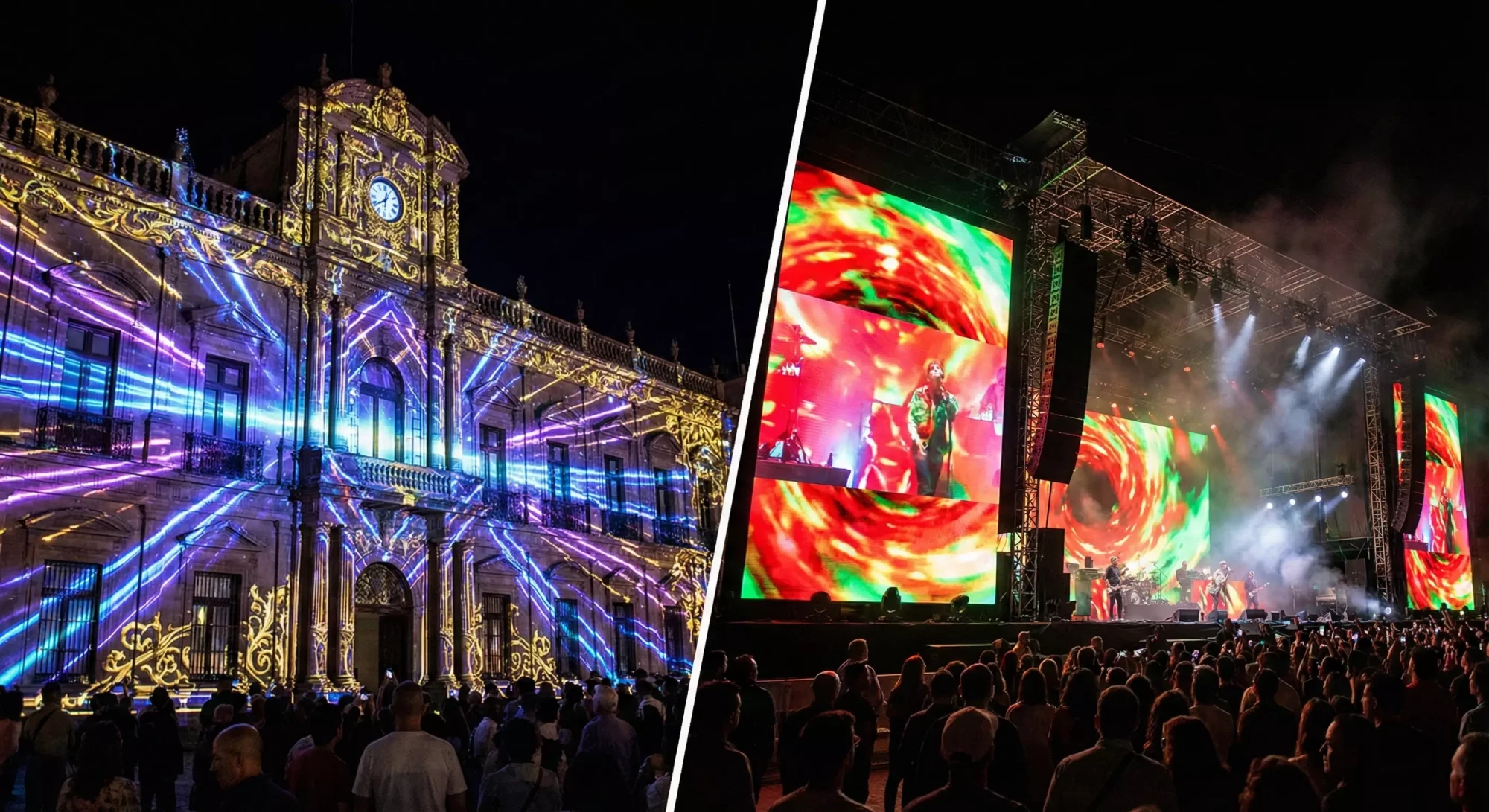
Projection mapping and LED walls are two of the most powerful visual technologies used in festivals, municipal events, concerts, trade shows and outdoor advertising. Both can produce impressive results, but they work differently, excel in different environments and carry different cost profiles.
This guide compares projection mapping and LED walls across cost, brightness, flexibility, installation requirements and ideal use cases, so that cities, festivals and businesses can choose the right option for their next event or activation.
Projection Mapping vs LED Walls: The Core Difference
Although both display digital content, the technologies operate in fundamentally different ways:
- Projection mapping casts light from a projector onto an existing surface such as buildings, snow, inflatables, trees, fabric or vehicles.
- LED walls are physical displays built from modular LED panels that emit light directly and function as self-contained screens.
Because of this difference, projection mapping is generally more flexible and creative—shaping content to the environment—while LED walls are typically brighter and more predictable in a wide range of lighting conditions.
Cost Comparison
One of the biggest differences between projection mapping and LED walls is cost, especially when covering large surfaces.
Projection Mapping Costs
Projection mapping costs depend on projector brightness, number of projectors, content complexity and installation logistics. Typical ranges:
- Small activation: roughly 5,000 to 15,000
- Medium building or feature: roughly 15,000 to 45,000
- Large immersive event: 40,000 to 150,000 or more
Projection mapping is especially cost-effective when you want to cover a large amount of surface area using existing architecture, such as city halls, theatres or facades around a square.
LED Wall Costs
LED walls are usually more expensive on a per-square-foot basis. Costs can increase quickly as the screen size and resolution grow. Typical ranges:
- Small LED wall: roughly 12,000 to 30,000
- Medium LED installation: roughly 40,000 to 120,000 or more
- Large festival or stage LED wall: 150,000 to 500,000 or more
LED walls make the most sense when you need extremely bright, high-resolution video in a compact area (for example, behind a performer or in a trade show booth), or when daytime visibility is critical.
Brightness and Visibility
LED walls are inherently brighter, because they emit light directly from thousands of tiny LEDs. They can remain visible in full daylight or in areas with strong ambient lighting such as stadiums or busy entertainment districts.
Projection mapping relies on reflected light, so it performs best in low-light conditions. However, at night—even in urban environments—projection mapping can be very bright and visually striking when properly designed.
- LED walls: ideal for daytime use or venues with unavoidable bright light.
- Projection mapping: ideal for nighttime events where you want to transform existing surfaces into immersive experiences.
Installation Requirements
Projection Mapping
Projection mapping installations generally require:
- A clear line of sight from the projector to the projection surface.
- Weatherproof enclosures for outdoor projectors to protect against rain, snow and temperature changes.
- Mounting positions on rooftops, truss structures, poles or platforms.
- Stable power and signal routing.
If you plan to run projection outdoors for multiple nights or seasons, robust housings are important. You can see examples on our projection enclosure page.
LED Walls
LED walls need:
- Substantial structural support—often truss or ground-support systems.
- Weather-resistant LED panels for permanent outdoor setups.
- Significant power capacity relative to screen size and brightness.
- Visible cabling, processors and control hardware.
They can be excellent for stages and permanent signage but require more physical infrastructure than a projection-based approach.
Creative Flexibility
Projection mapping stands out when you want to integrate visuals into the physical environment. It works beautifully on:
- Historic or modern buildings
- Municipal landmarks and cultural institutions
- Snowbanks and winter landscapes
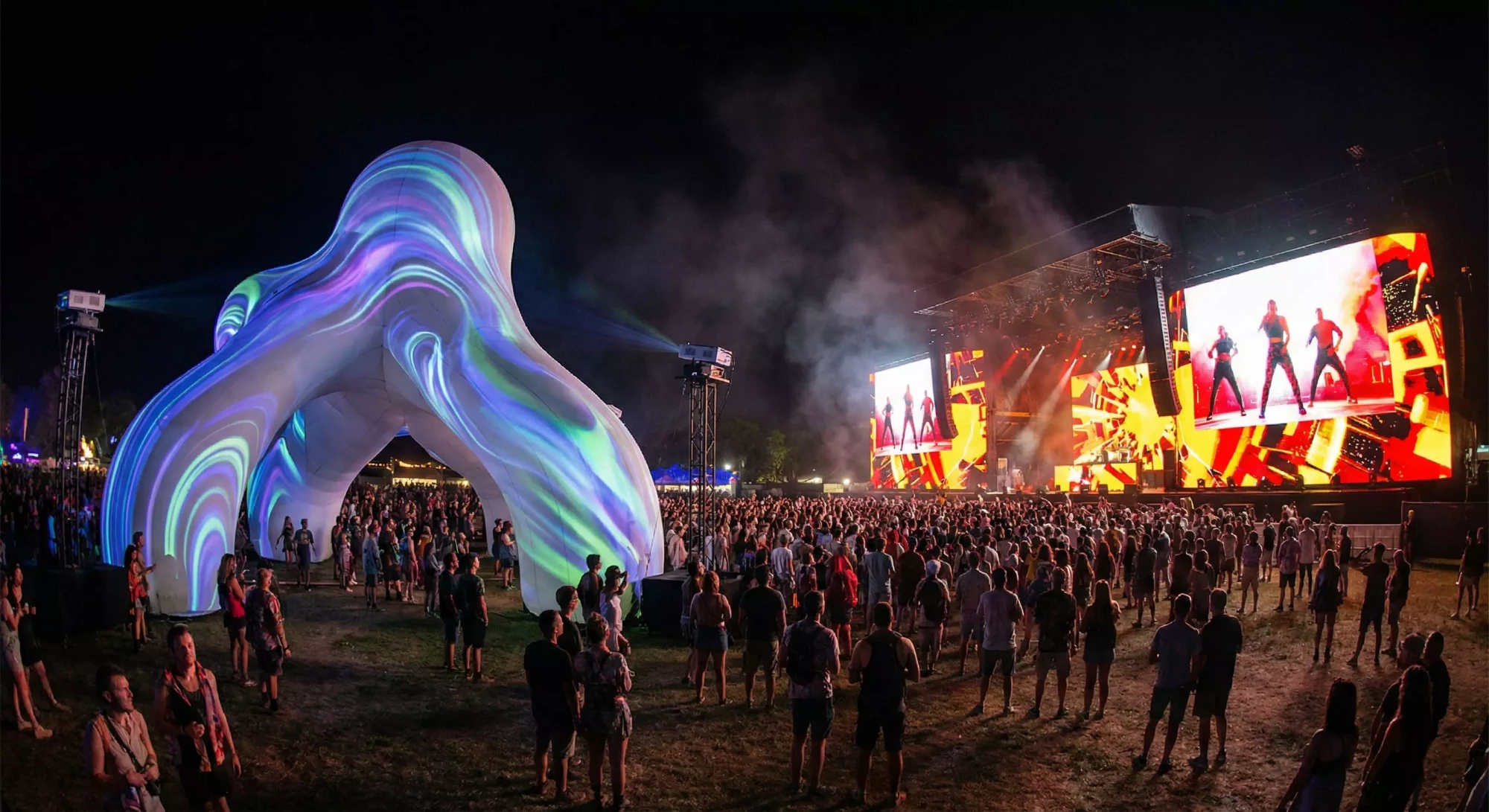
- Inflatable sculptures and custom 3D forms
- Trees and natural features in parks
- Cars and product displays
LED walls, on the other hand, excel for:
- Concert stages and live performances
- Trade show booths and conference keynotes
- Sports venues and scoreboards
- Digital signage where text and detailed video must remain readable in all conditions
When to Choose Projection Mapping
Projection mapping is usually the better option when:
- You want to transform existing architecture or landscapes into part of the show.
- You want a large, immersive canvas without building physical screens.
- You are planning a nighttime or low-light experience.
- You want seasonal or rotating content using the same hardware.
- You are focused on storytelling, atmosphere and visual impact.
For cities and festivals, projection mapping often delivers more “wow factor” for the investment, particularly when you can reuse the equipment across Christmas, Halloween and summer events.
When to Choose LED Walls
LED walls are the right choice when:
- You need visuals to be clearly visible in bright daylight.
- You are building a high-energy stage environment for performers.
- You need detailed text, logos or video to be perfectly legible from long distances.
- You want a permanent or semi-permanent digital display area.
Combining Both for Maximum Impact
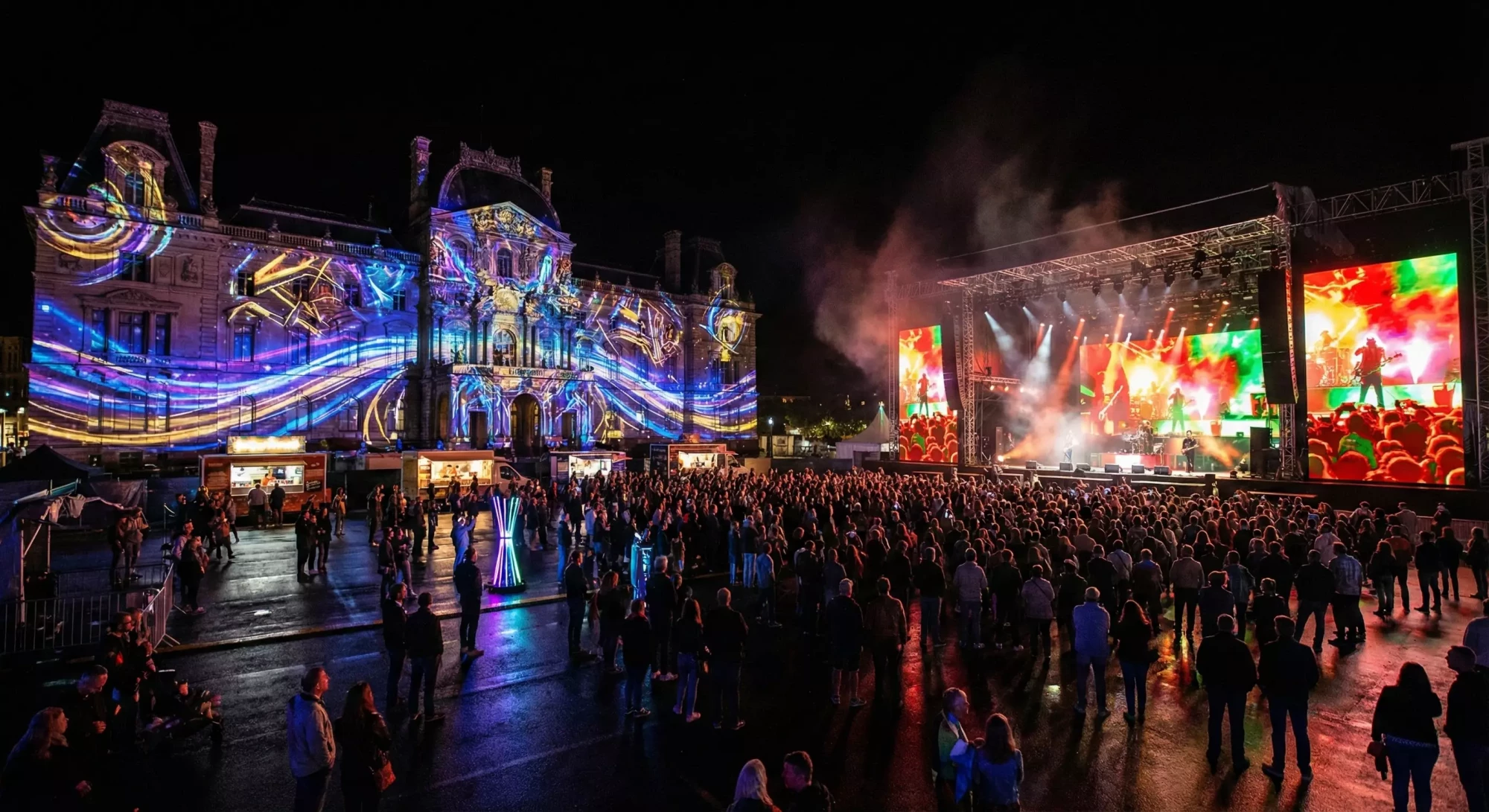
Many large events and festivals use both technologies together—LED walls for stages and performance areas, and projection mapping for buildings, scenic elements and immersive zones. This hybrid approach leverages the strengths of each and creates a more layered visual environment.
If you’re not sure which technology makes the most sense for your project, you can contact us through our contact form, share a brief description of your site and goals, and we can recommend a solution based on budget, surfaces and audience size.
Both projection mapping and LED walls are powerful tools, but when used thoughtfully in the right context, projection mapping often provides more creative flexibility and larger-scale visual impact for public spaces and temporary events.