Projection Mapping for Festivals: Stages, Tents and 3D Shapes
Projection Mapping for Festivals: Stages, Tents and 3D Shapes
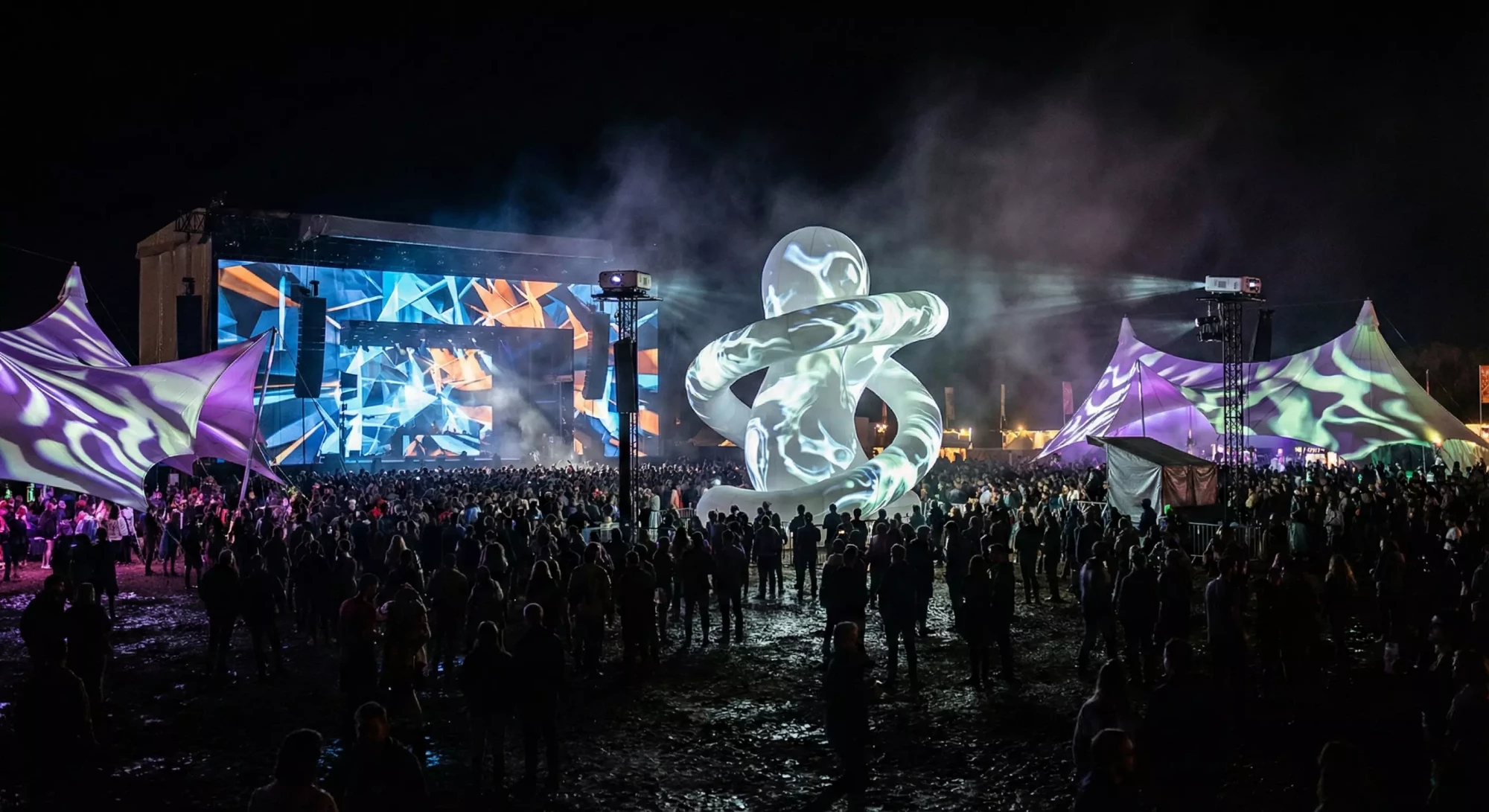
Festivals are some of the best environments for projection mapping. Stages, tents, inflatables and temporary structures all become programmable canvases that can change look and mood across the weekend. Compared to traditional lighting alone, projection mapping adds depth, animation and storytelling that audiences remember long after the event ends.
This guide explains how festival directors, production managers, lighting designers and sponsors can use projection mapping effectively on stages, tents and 3D shapes without overcomplicating the technical side.
Why Festivals Are Perfect for Projection Mapping
Festivals already have the ingredients projection mapping loves: interesting structures, audience energy, strong music and nighttime atmospheres. Instead of adding more physical scenery, projection allows you to:
- Transform existing elements like stage towers or tents into dynamic visuals.
- Rotate looks across different artists or nights without rebuilding sets.
- Integrate sponsor messaging in a tasteful, motion-driven way.
- Create immersive zones away from the main stage for exploration.
For seasonal festivals, city-run events and tourism boards, our seasonal event projection mapping services can extend these ideas to municipal or community festivals as well.
Projection Mapping on Festival Stages
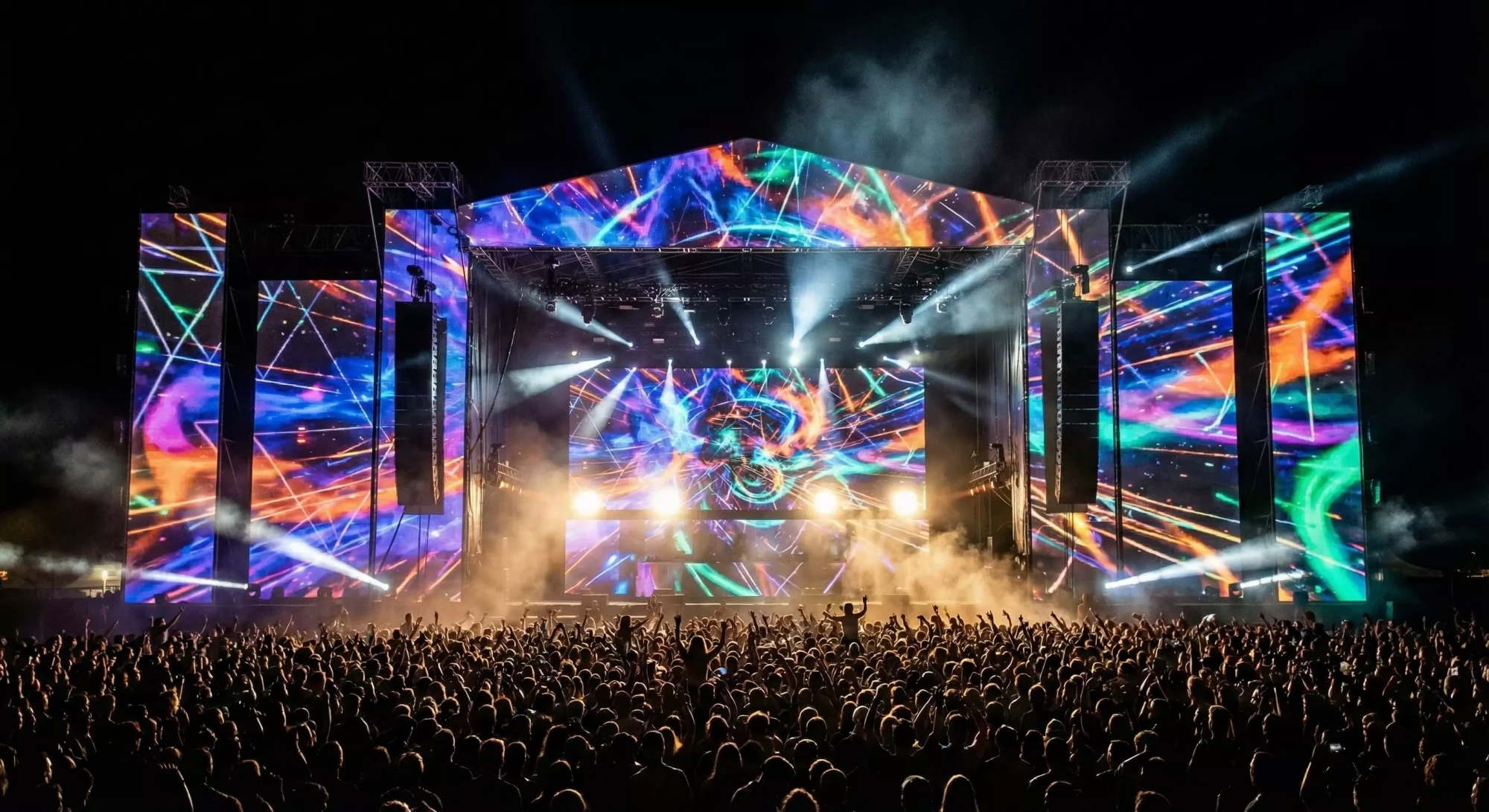
The main stage is usually the visual anchor for a festival. Projection mapping can be applied to:
- Stage facades and prosceniums
- Side towers and PA hangs (with scenic cladding)
- Backdrops and header elements
- Set pieces around the DJ or band
Short-throw projectors mounted on front-of-house truss or custom towers can cover the stage architecture without blinding performers. Content can be tailored per headliner or per time slot.
Balancing Projection With Stage Lighting
Projection mapping and stage lighting need to be designed together. Key considerations:
- Keep wash lights angled to avoid washing out the projection surfaces.
- Use projection-safe colours (cooler washes) where possible on mapped zones.
- Coordinate with the lighting designer so their cues and your content work together, not against each other.
- Use high-contrast content to stand up to bright moments in the lighting show.
Projection mapping is not meant to replace stage lighting; it becomes a third visual layer alongside lighting and LED elements.
Projection Mapping on Tents and Fabric Structures
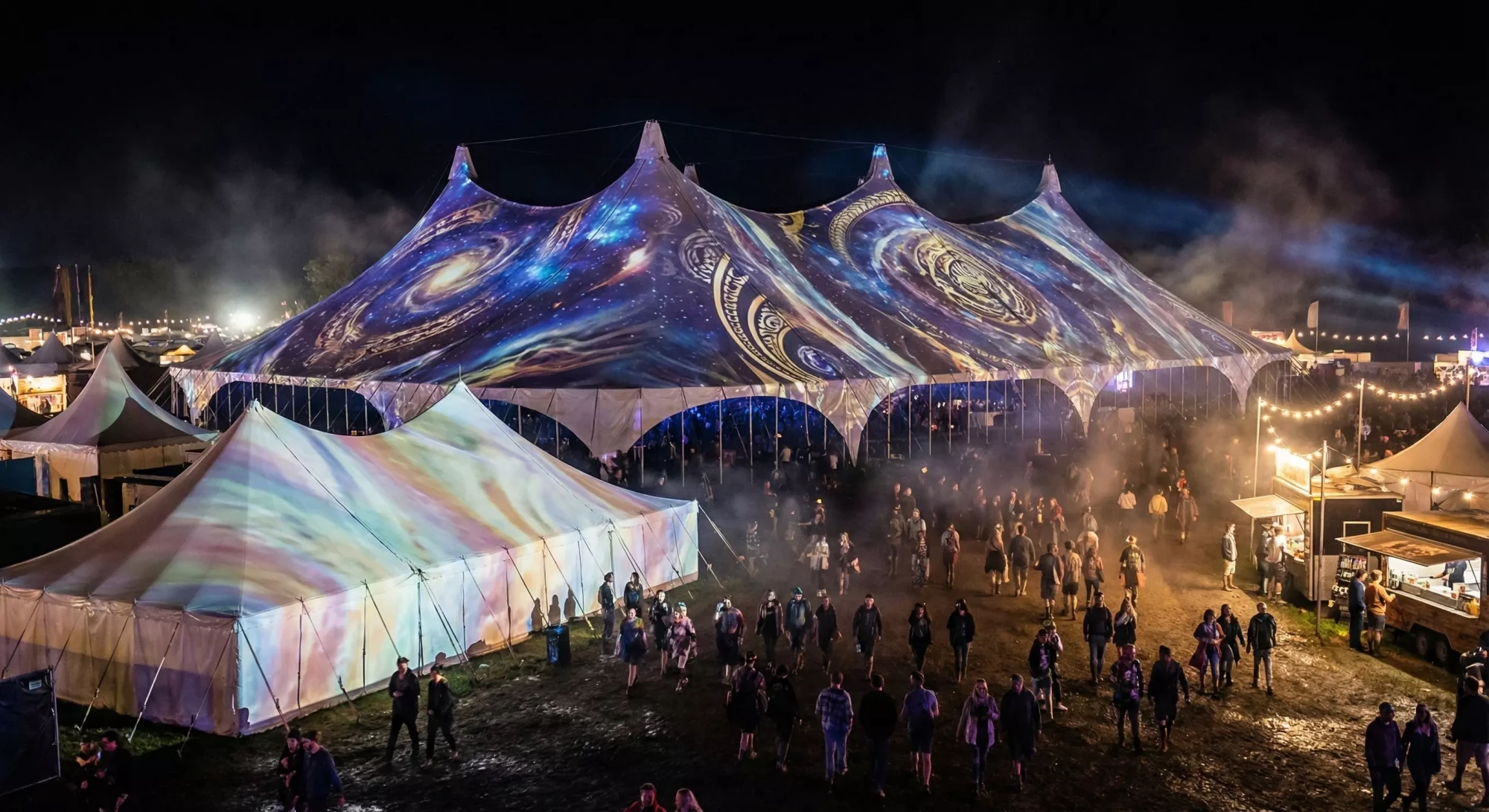
White tents and fabric structures are among the best and most overlooked projection surfaces at festivals. They are already on site and tend to have clean, continuous surfaces.
You can projection map:
- Entrance tents to create animated gateways.
- VIP or sponsor tents to elevate brand presence.
- Chill-out domes or shade structures for ambient content.
- Food court coverings for subtle atmospheric visuals.
Rear vs Front Projection on Fabric
Fabric structures offer a choice between front and rear projection:
- Front projection: Simple to set up, projector sits outside the tent facing the fabric.
- Rear projection: Projector sits behind a special rear-projection fabric or film, keeping hardware hidden and audience sightlines clean.
Rear projection looks especially good on translucent materials, creating a soft, glowing effect that feels more like a living lantern than a flat screen.
Projection Mapping on 3D Inflatables and Scenic Elements
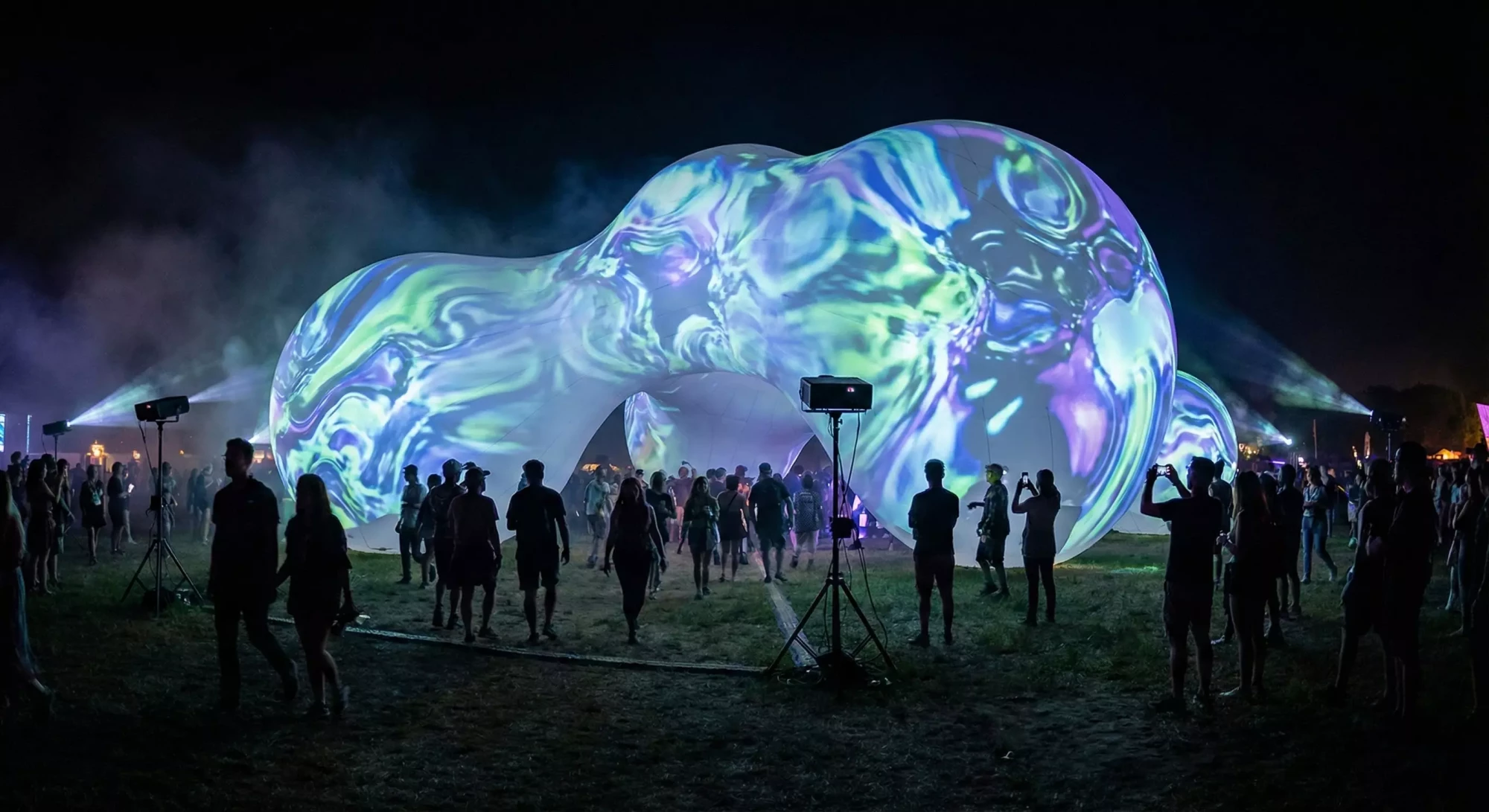
Inflatables and temporary scenic pieces are where projection mapping becomes truly sculptural. White inflatables, in particular, can be wrapped in light to appear:
- Metallic or glass-like
- Covered in moving patterns or textures
- Filled with swirling energy or smoke
- Morphing shapes through animated shading
These pieces can be placed:
- Near the main stage as visual anchors
- In walk-through zones as interactive art
- At festival entrances as signature landmarks
Content Strategy for Festivals
Festival projection content should support the overall brand while allowing variation across sets and days. Consider:
- Base visual language: colours, shapes and motifs that match the festival identity.
- Artist-specific looks: alternate palettes or patterns per headliner.
- Time-of-night variations: slower, calmer visuals early; more intense later.
- Sponsor windows: short, tasteful sponsor sequences between sets rather than constant logo loops.
Compared to LED walls, projection mapping excels at wrapping these looks around real structures, making the environment itself feel like part of the performance.
Technical Planning for Festival Projection Mapping
Good technical planning ensures the system holds up for the entire event:
- Throw distance: Confirm you have safe mounting locations at the right distance and height.
- Lenses: Short-throw or ultra-short-throw lenses for tight site lines.
- Weatherproofing: Outdoor festivals require proper housings and ventilation for projectors.
- Rigging: Use engineered truss and mounts rated for wind and load.
- Control: Use mapping software that can handle multiple outputs and quick looks changes.
For outdoor installations, especially multi-day festivals, you can explore weather-protected options on our projection enclosures page.
Where Projection Mapping Fits in Your Festival Budget
Projection mapping can often replace or reduce the need for large physical scenic builds. Instead of constructing massive set pieces for one event, you invest in reusable digital content and hardware that can be repurposed for future editions or other events.
For festivals run by municipalities or tourism groups, this also means the same hardware can later be used for:
- Winter projections on city hall
- Halloween trails and haunts
- Public art nights and cultural festivals
Ready to Explore Projection Mapping for Your Festival?
If you’re planning a festival and want to explore how projection mapping could work on your stages, tents or 3D structures, you can:
- Gather a few photos of your stage and site layout
- Identify tents or inflatables that could become canvases
- Think about which nights or sets need the biggest visual impact
From there, you can reach out through our contact form with your photos and a short description of your event. We’ll help recommend realistic projection layouts, hardware approaches and content ideas that match your budget and production schedule.
When designed properly, projection mapping doesn’t just decorate your festival—it turns your stages, tents and sculptures into living, breathing parts of the show.