
The Future of Projection Mapping – Trends for Cities, Festivals and Brands
The Future of Projection Mapping – Trends for Cities, Festivals and Brands
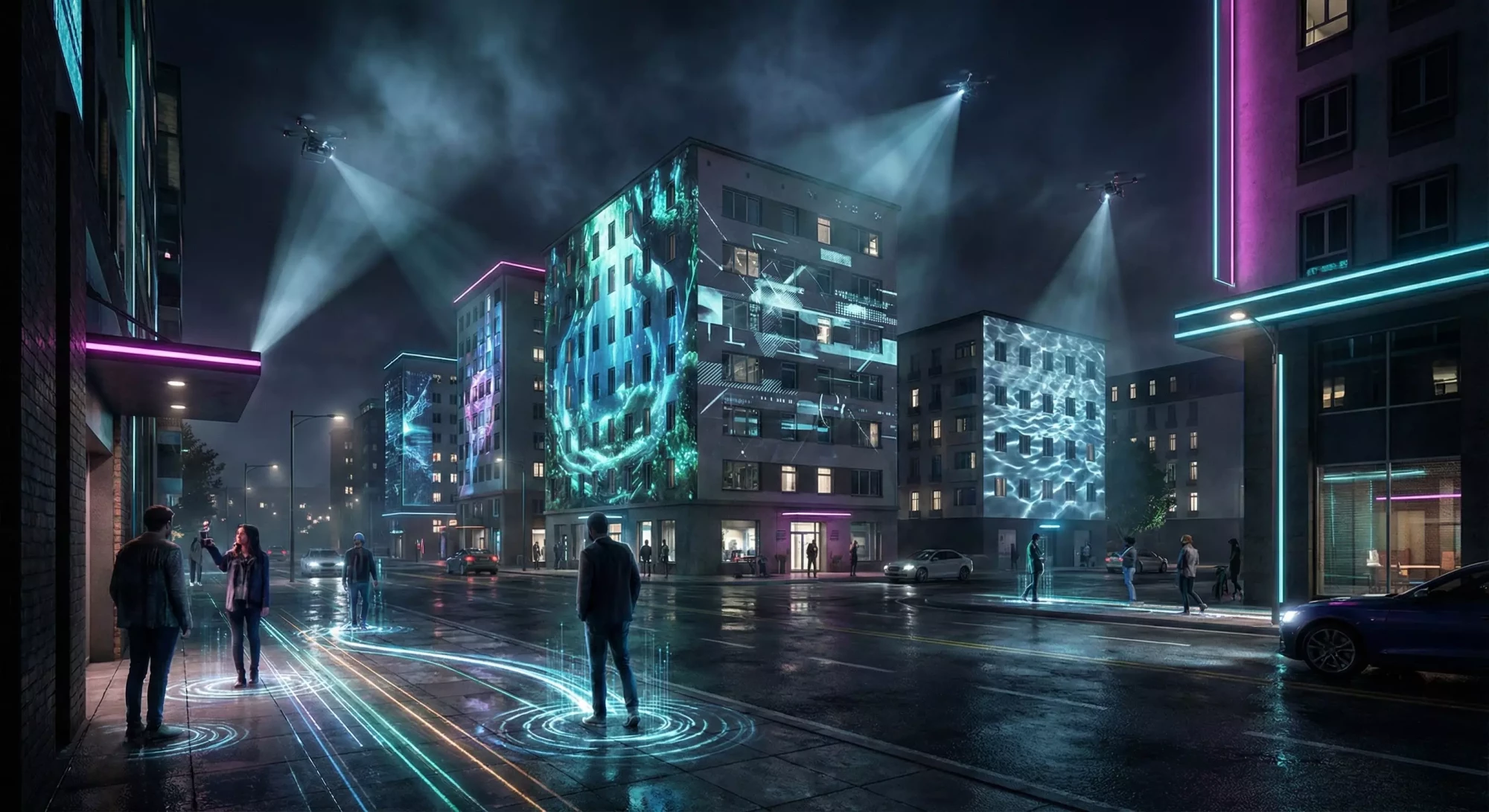
Projection mapping has moved from niche art installations into mainstream use for cities, festivals and major brands. As projectors, software and sensors continue to advance, the next wave of projection mapping will be more interactive, more integrated and more permanent than ever.
This article looks ahead at the trends shaping the future of projection mapping and what they mean for municipal planners, festival organizers and marketing teams.
Trend 1: From One-Off Shows to Long-Term Programs
Many early projection mapping projects were one-night-only spectacles. Increasingly, cities and venues are investing in reusable infrastructure—permanent mounts, power, data and enclosures—so they can run:
- Seasonal holiday shows
- Cultural festival content
- Tourism campaigns
- Public art programs
The same hardware can support multiple content packages across the year, improving return on investment and turning projection mapping from a special event into an ongoing asset.
Trend 2: Interactivity and Audience Participation
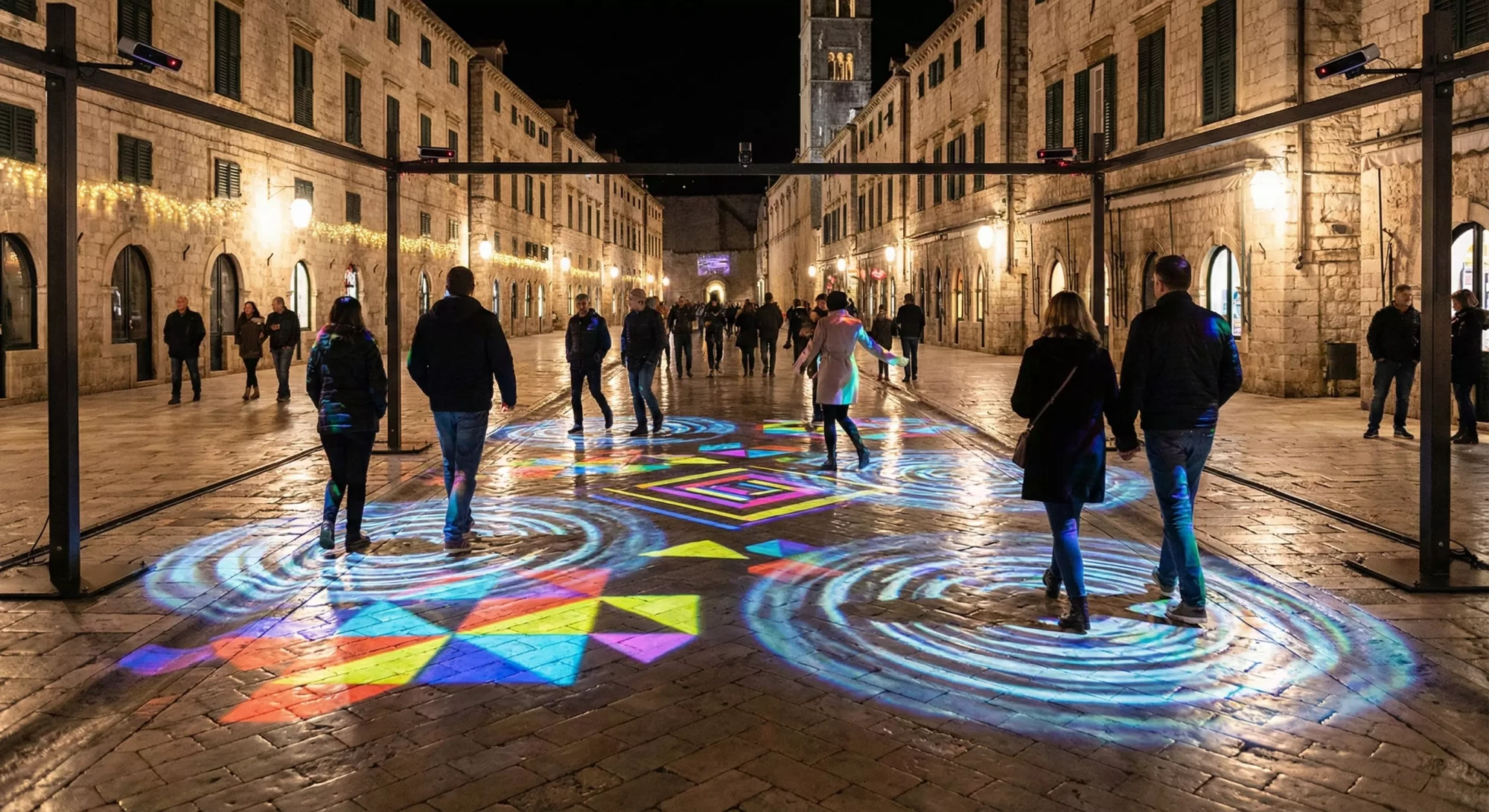
The future of projection mapping is not just something people watch—it is something they influence. With modern sensors and tracking systems, installations can respond to:
- Motion and position of visitors
- Pressure sensors in pathways
- Mobile device interactions
- Audio levels or crowd dynamics
For example, a city square could feature a projection-mapped ground where patterns change as people walk across it, or a festival art piece that reacts to hand gestures and group movement.
Trend 3: Integration With Smart City Infrastructure
As cities adopt smart lighting, sensors and data platforms, projection mapping is likely to become part of a larger ecosystem. Potential integrations include:
- Dynamic content schedules tied to events or seasons
- Ambient light sensors that adjust brightness automatically
- Content triggered by festivals, game days or tourism events
- Wayfinding visuals that adapt to crowd flow or construction
This moves projection mapping from a static event tool into an adaptive, data-driven layer of the public realm.
Trend 4: Deeper Integration With Lighting, Lasers and XR
Projection mapping is increasingly being designed alongside:
- Architectural and street lighting
- Stage lighting and moving heads
- Lasers and atmospheric effects
- XR elements such as AR overlays in mobile apps
The most memorable future projects won’t be “projection shows” or “lighting shows” but fully unified visual environments where all systems share a common creative direction.
Trend 5: Sustainable Projection Practices
Energy efficiency and environmental impact are becoming central considerations. Developments in this area include:
- Laser projectors with higher efficiency and longer life.
- Smarter scheduling to reduce unnecessary runtime.
- Content designed for lower brightness without sacrificing impact.
- Integration with renewable power sources where practical.
Cities and brands that treat projection mapping as part of their sustainability strategy will likely be ahead of regulatory and public expectations.
Trend 6: More Technical Sophistication, Simpler User Interfaces
Behind the scenes, projection mapping software is becoming more powerful: better warping, real-time engines, high dynamic range and advanced masking. At the same time, user interfaces are becoming more approachable.
The goal is to allow specialist teams to handle the complex setup work while enabling local staff or operators to trigger shows, change playlists and schedule content without deep technical training.
Trend 7: Projection Mapping as a Branding Platform
For cities, festivals and major brands, projection mapping is becoming part of the visual identity. Over time, audiences come to associate:
- Specific buildings or landmarks
- Signature visual patterns or colours
- Recurring seasonal shows
This creates long-term recognition that goes beyond any single campaign and reinforces the place or brand as modern, creative and experience-focused.
What This Means for You
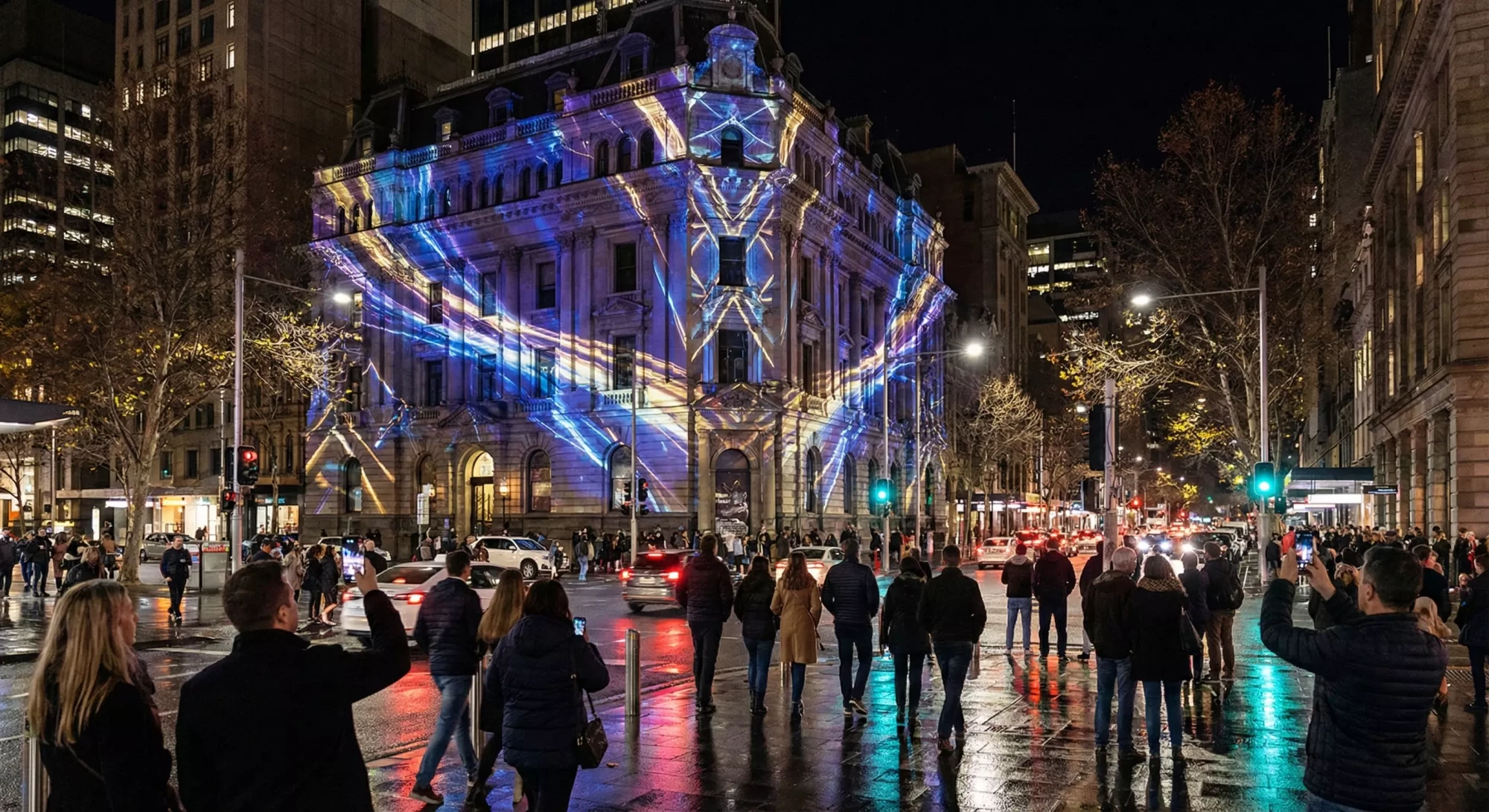
If you work in municipal planning, tourism, festival production or brand marketing, the future of projection mapping offers:
- New tools for engagement that go beyond banners and static lights.
- Opportunities for long-term programs instead of one-off spectacles.
- Ways to integrate art, branding and technology into your spaces.
To make the most of these trends, it’s useful to start with one solid, well-planned project—such as a seasonal show or a landmark event—then build from there.
Planning Ahead
If you would like to explore how projection mapping can fit into your future plans, you can:
- Identify one or two key surfaces or locations
- Consider how often you would like to update content
- Think about how projection could support your tourism, branding or cultural goals
From there, you can contact us via our contact page to discuss long-term strategies, not just one-time events.
Projection mapping is already impressive today—but its future lies in becoming a flexible, integrated visual layer that helps cities, festivals and brands communicate in more immersive, responsive and memorable ways.