

How Technical Directors Plan Projection Mapping for Large Festivals
How Technical Directors Plan Projection Mapping for Large Festivals
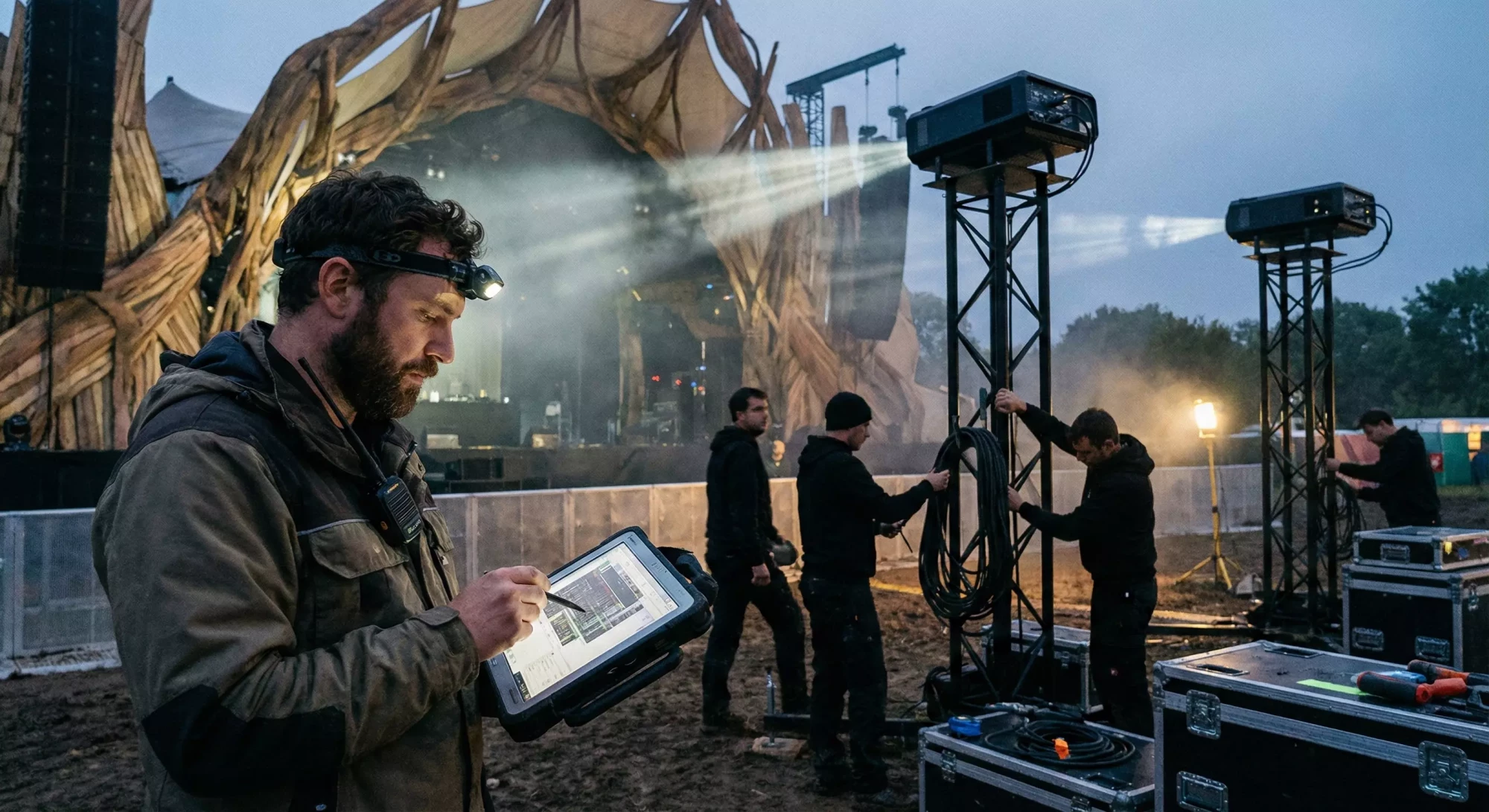
Large festivals require careful planning to achieve consistent, bright and reliable projection mapping results. Technical directors oversee everything from projector placement to power distribution, mapping workflows and safety procedures. This guide covers the full process—from site survey to opening night.
1. Understanding the Festival Layout
TDs begin with:
- Surface identification (buildings, tents, inflatables, scenic pieces)
- Audience flow patterns
- Sightlines and viewing angles
- Lighting levels from nearby stages
2. Projector Placement Decisions
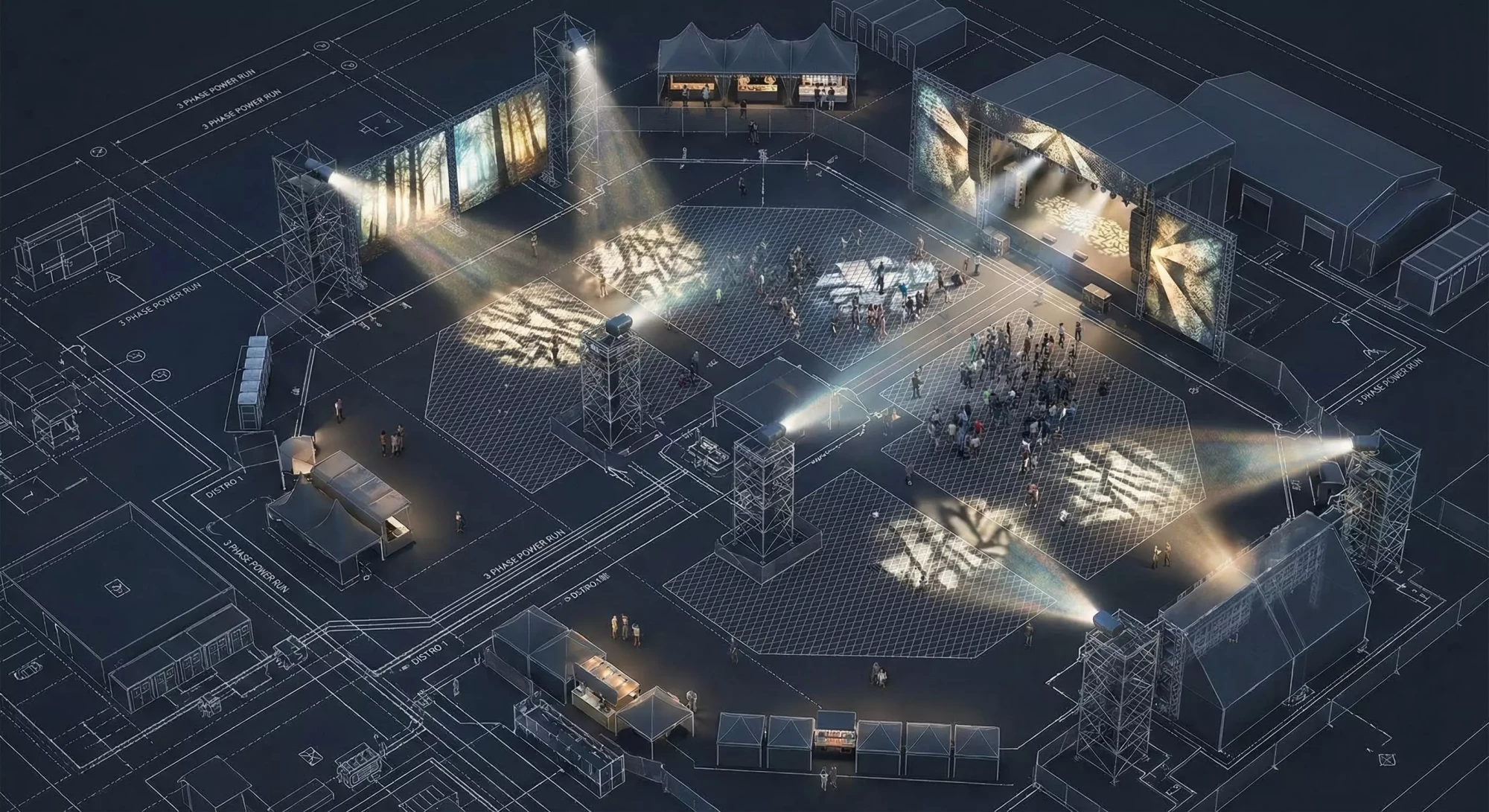
TDs select projector positions based on:
- Throw distance
- Brightness requirements
- Angles that minimize shadows
- Safe truss tower locations
3. Lens Selection
Festivals often require short-throw lenses due to crowded grounds or backstage limitations. Indoor shows may rely on standard or long-throw options.
4. Power & Data Distribution
Reliable power and signal flow are essential:
- Dedicated circuits for projectors
- Shielded data runs
- UPS units for protection
- Redundant playback systems
5. Weather & Safety Considerations
Outdoor festivals require:
- Ballasted truss towers
- Weatherproof enclosures
- Wind load checks
- Cable ramping for pedestrian access
6. Technical Rehearsals
TDs run:
- Alignment tests
- Content playback checks
- Safety inspections
- Final brightness adjustments
Next Steps
If you’re planning projection mapping for a festival, send your site photos through our
contact page.
Proper technical planning ensures projection mapping runs flawlessly from the first cue to the final moment of the festival.