
The Complete Guide to Projection Mapping for Large Events
The Complete Guide to Projection Mapping for Large Events
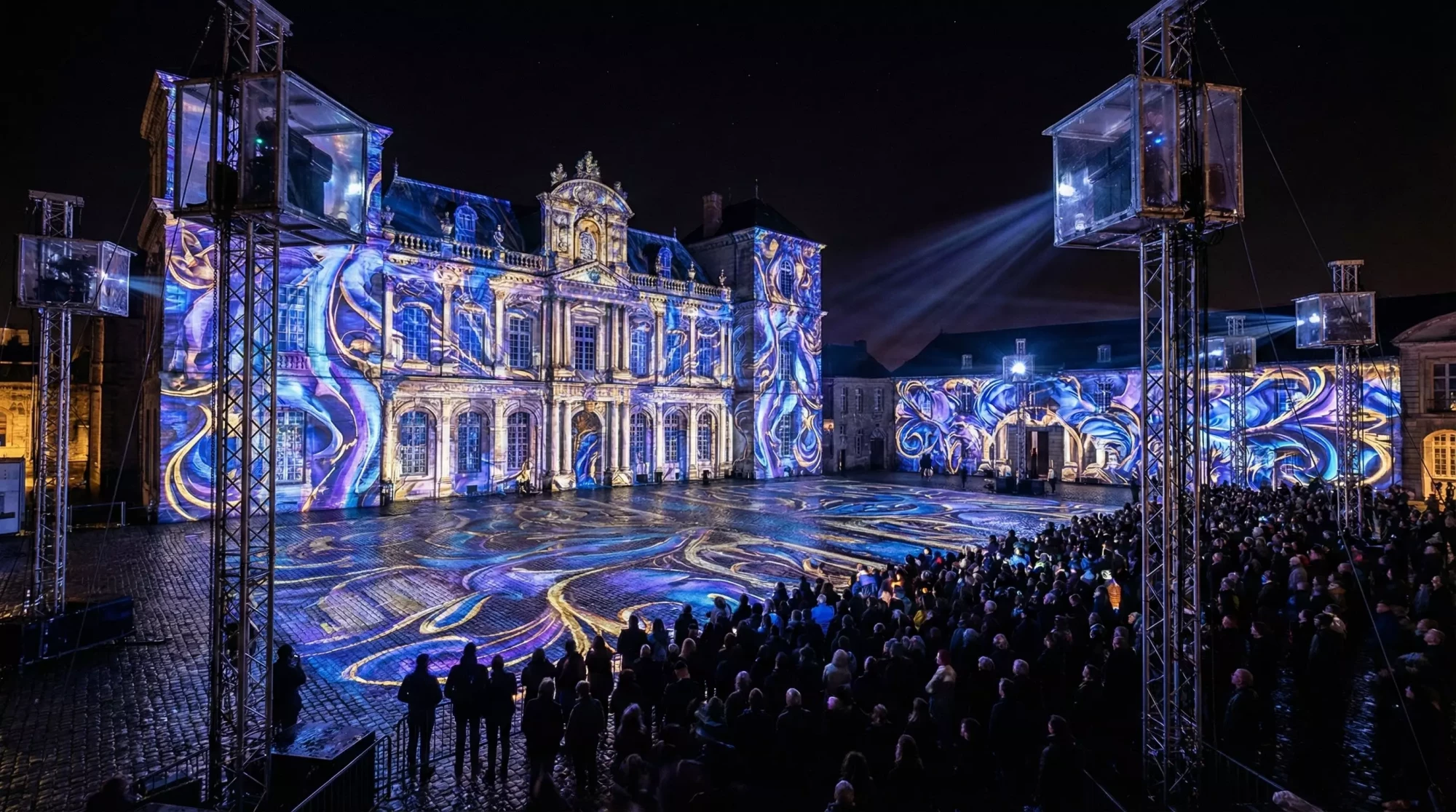
Planning projection mapping for a large event can feel overwhelming at first. You are dealing with big surfaces, strict timelines, multiple stakeholders and a lot of technical decisions. The good news is that with a structured process, large-scale projection mapping becomes predictable and repeatable—even for complex festivals, city events and corporate shows.
This guide walks through the full lifecycle of a large projection mapping project: from early concept and site surveys, through hardware and content decisions, all the way to showtime and post-event reuse.
Typical Large Event Scenarios
Projection mapping for large events usually fits into a few common categories:
- City-wide festivals featuring a central building or multiple mapped sites
- Major product launches using a building or temporary structure as a backdrop
- Large concerts or tours where mapping is integrated into the stage design
- Corporate or association conferences using immersive scenic environments
- Tourism events focused on a landmark or downtown core
If your project involves municipal spaces or seasonal events, our municipal projection mapping services and seasonal event projection mapping are specifically designed for these types of installations.
Phase 1: Defining Goals and Success Metrics
Before any technical planning, you need clarity on why you are doing this:
- Are you trying to increase tourism or foot traffic?
- Is this about brand visibility for sponsors?
- Do you want a signature moment (launch, countdown, reveal)?
- Is the focus on media coverage or visitor experience?
These answers inform everything else—how long the show runs, what kind of content you need and how much hardware is appropriate.
Phase 2: Site Survey and Surface Selection
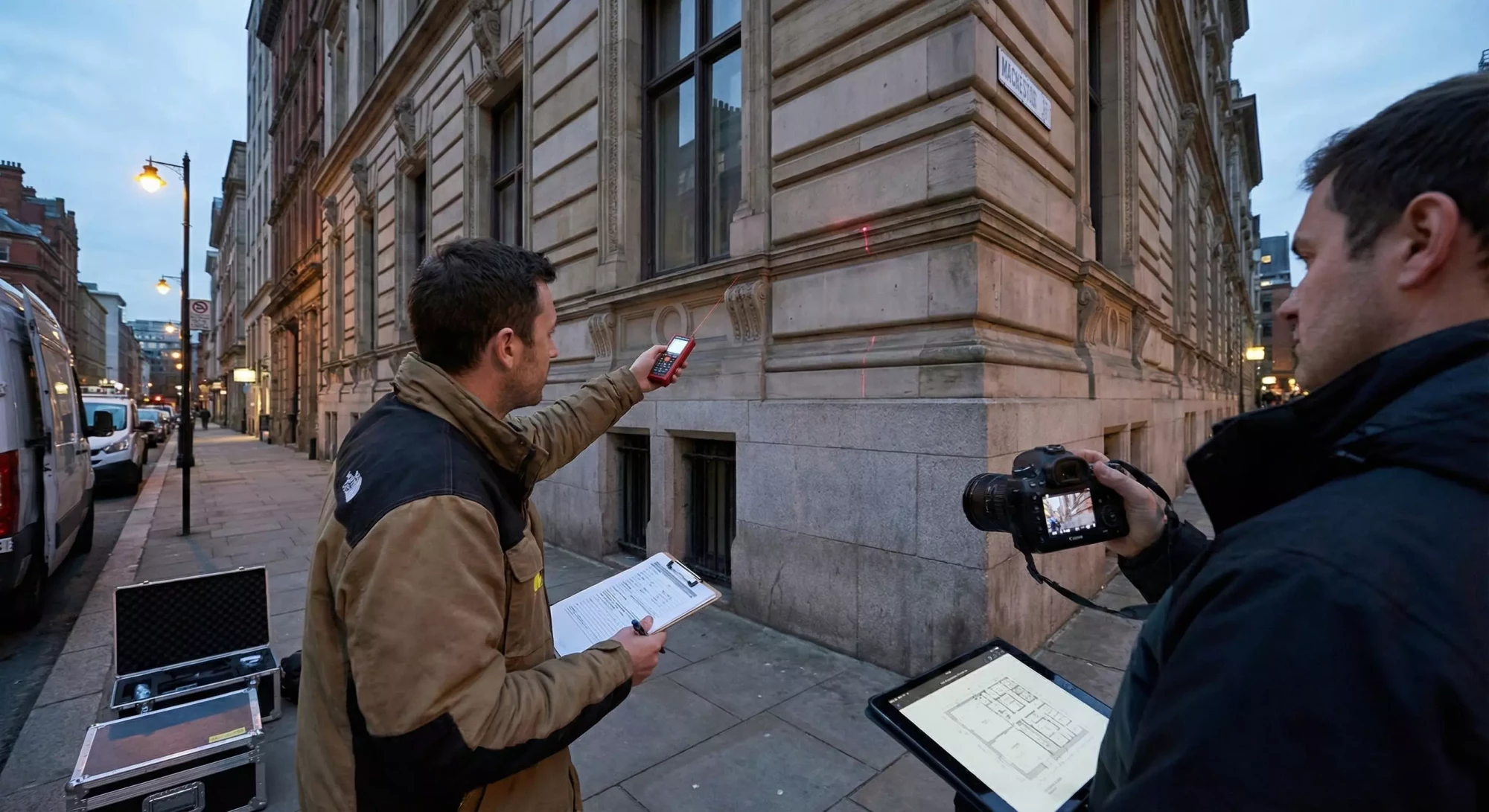
Large events live or die by the quality of the surfaces you select. During a site survey, you should:
- Identify primary surfaces such as building façades, stage structures or inflatables.
- Consider secondary surfaces like trees, pathways or temporary scenic pieces.
- Note viewer positions and expected crowd density.
- Record ambient light sources (streetlights, signage, windows).
Capture reference photos from several angles and, where possible, measure widths and heights. This information forms the basis of your projector placement and content design.
Phase 3: Estimating Brightness and Hardware Needs
For large events, projector brightness is a critical decision. You must account for:
- Surface size (width and height)
- Surface colour and texture (light vs dark, matte vs glossy)
- Ambient light levels (downtown, stadium, waterfront, etc.)
- Viewing distance (how close the audience is)
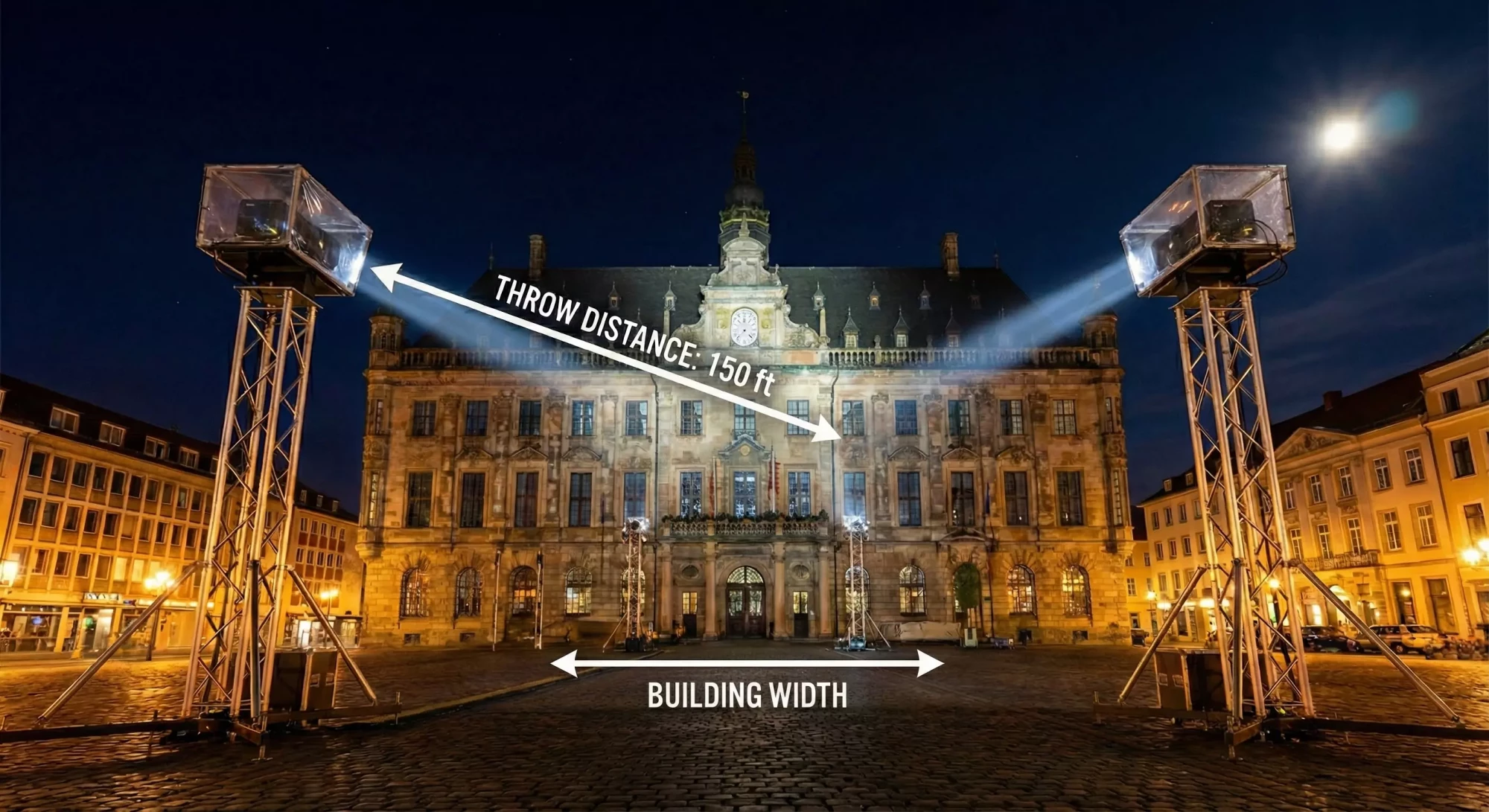
In many large-event scenarios, you will use multiple projectors blended or stitched together. High-output laser projectors (for example, 10,000–20,000 lumens each) are common for city hall or landmark-sized buildings.
If your installation is outdoors or needs to run for multiple nights, review our projection enclosures for weather protection and long-term operation.
Phase 4: Choosing Mounting Locations and Lenses
Once you know how many projectors you need and what brightness you’re aiming for, you can plan:
- Exact projector positions (distance, height, horizontal offset)
- Lenses (short-throw, standard, long-throw)
- Mounting structures (truss towers, rooftops, balconies, poles)
Short-throw lenses are valuable in tight urban spaces, while longer-throw lenses may be needed for distant viewing positions in plazas or stadiums. Ensure there are safe mounting points that can support the weight and withstand wind loads.
Phase 5: Content Strategy for Large Events
Large events require content that reads clearly from a distance and holds attention. Consider:
- Visual clarity: bold shapes, high contrast, controlled motion.
- Show structure: continuous loop vs scheduled performances.
- Storytelling elements: local landmarks, abstract themes, seasonal motifs.
- Sponsor integration: short logo or name sequences, not constant overlays.
For festivals and tourism-driven events, you may create multiple scenes: one for general ambience, one for peak crowd times and one for special countdown or reveal moments.
Phase 6: Timeline Planning
Successful large-scale projection mapping projects work backwards from the event date. A typical timeline might look like:
- 8–16 weeks out: goals defined, surfaces selected, quotes approved.
- 6–10 weeks out: site survey, brightness estimates, lens decisions.
- 4–8 weeks out: content production (animation, testing, revisions).
- 1–2 weeks out: hardware prep, pre-configuration, on-site logistics finalized.
- 1–3 days out: installation, alignment, rehearsals and safety checks.
Shorter timelines are possible but compress the revision and testing windows considerably.
Phase 7: On-Site Setup, Alignment and Show Control
On-site work for large events includes:
- Installing truss, mounts and enclosures
- Running power and signal to all projector positions
- Aligning and warping the images precisely to the surfaces
- Blending multiple projectors seamlessly if required
- Integrating with audio, lighting and show control systems
This is where experienced projection technicians and mapping software matter. Good alignment and calibration can dramatically improve perceived resolution and brightness.
Phase 8: After the Event – Reuse and Future Shows
One of the key advantages of projection mapping is reuse. After a large event:
- Hardware can be redeployed for other city events or festivals.
- Content can be adapted and rebranded for future years.
- Mapping data (3D models, masks, warps) can be reused for new themes.
This is especially powerful for municipalities and tourism boards that want a long-term visual strategy, not just a one-night spectacle.
Next Steps
If you’re planning a large event and considering projection mapping, a helpful first step is to gather:
- Photos of your potential surfaces and viewing areas
- Any drawings or dimensions of key buildings
- Event dates and expected audience size
You can then share these details through our contact page so we can recommend realistic options for brightness, mounting and content that fit your goals and budget.
With the right process, projection mapping for large events becomes less of a risk and more of a reliable, repeatable tool to elevate your shows year after year.