
Event Truss Structures for Projection Mapping – Rentals, Purchasing and Design Options
Event Truss Structures for Projection Mapping – Rentals, Purchasing and Design Options
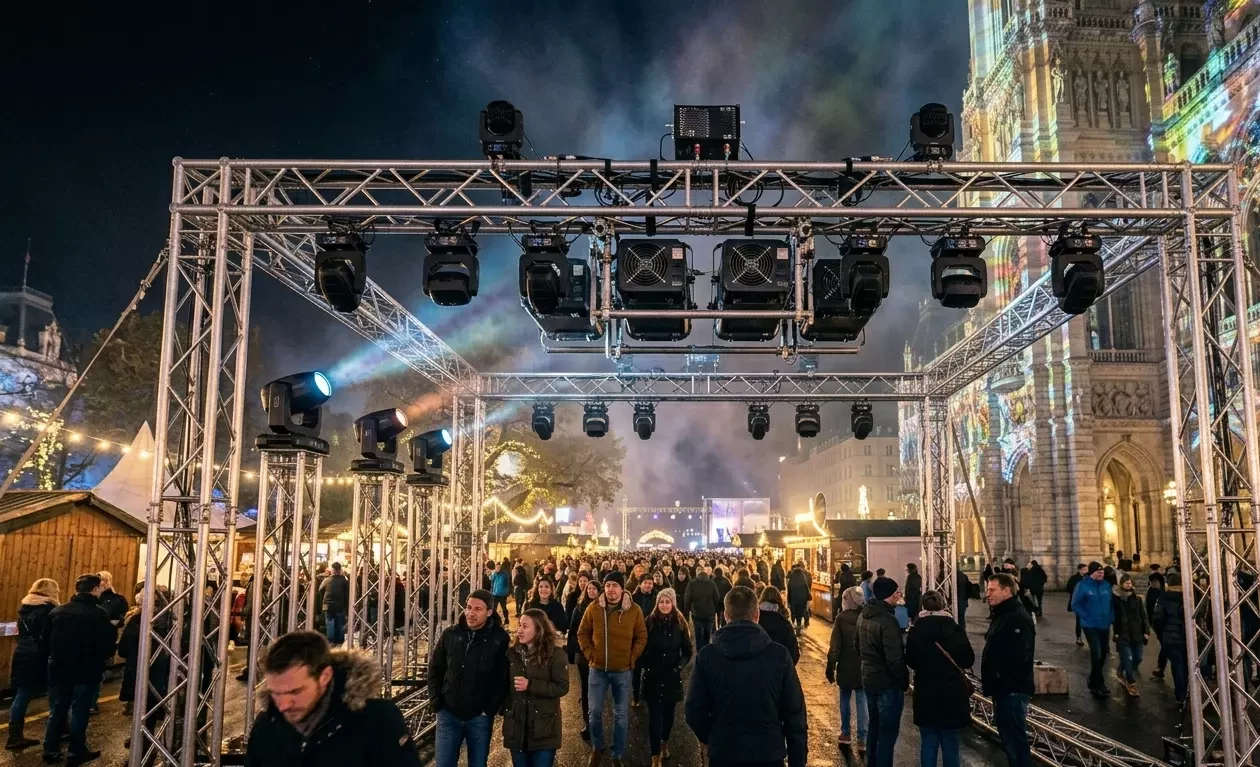
Truss structures are one of the most important pieces of infrastructure for projection mapping and large-scale event production. Whether supporting projectors, lighting, LED walls, speakers or scenic elements, truss systems provide the strength, flexibility and modularity needed to safely build temporary or semi-permanent event environments.
For cities, festivals, tourism groups and event organizers, understanding how truss systems work can make planning significantly easier. This guide explains common truss structures, when it makes sense to rent versus purchase, and how truss is typically used for projection mapping installations.
What Is Event Truss?
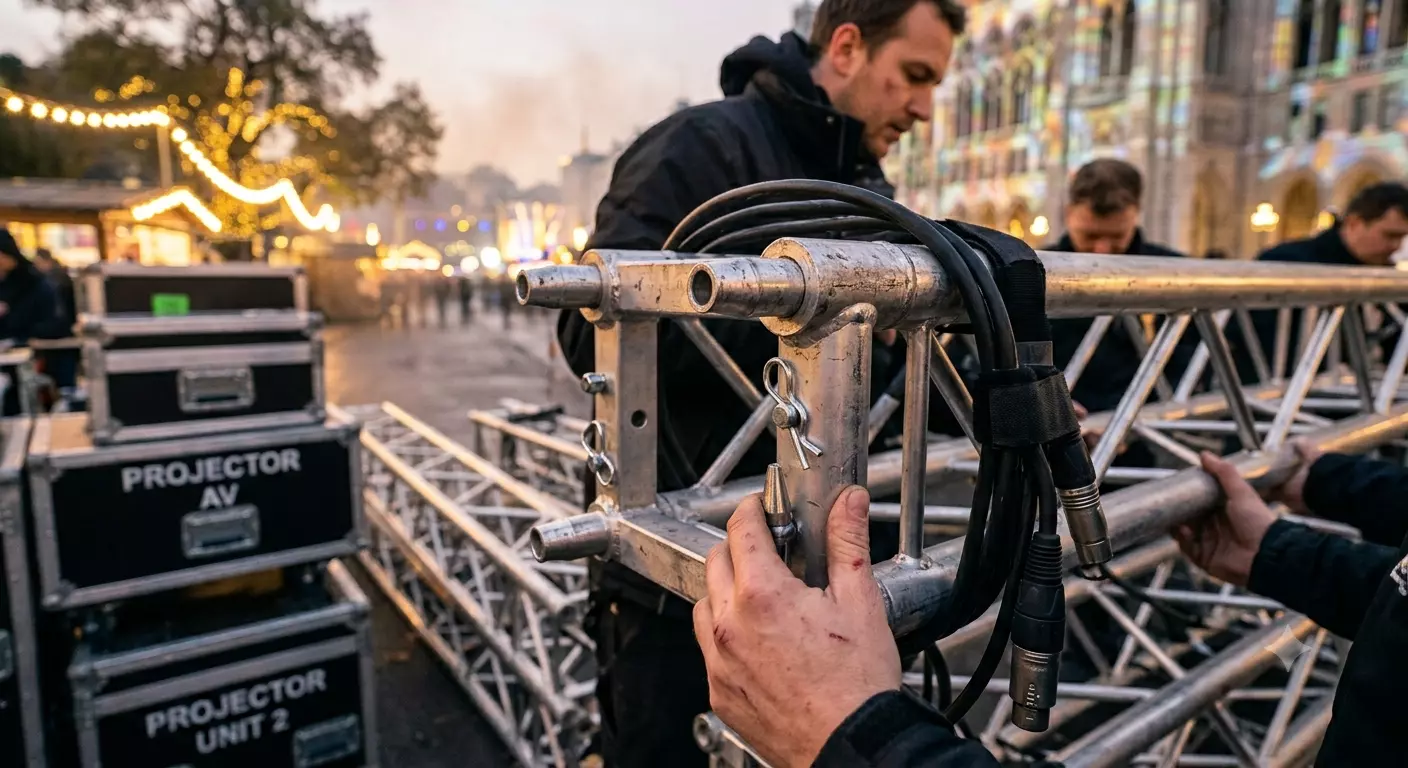
Event truss is a modular aluminum structural system commonly used in live events, concerts, festivals and corporate productions. Most truss systems are built from lightweight but strong aluminum sections that connect together using standardized hardware.
Truss is popular because it:
- Supports heavy equipment safely
- Can be assembled into many shapes and layouts
- Breaks down for transport and storage
- Allows fast temporary installation
- Looks professional and clean
For projection mapping specifically, truss provides mounting positions for projectors when rooftops, poles or permanent structures are unavailable or impractical.

Common Truss Structures Used for Projection Mapping
1. Truss Totems
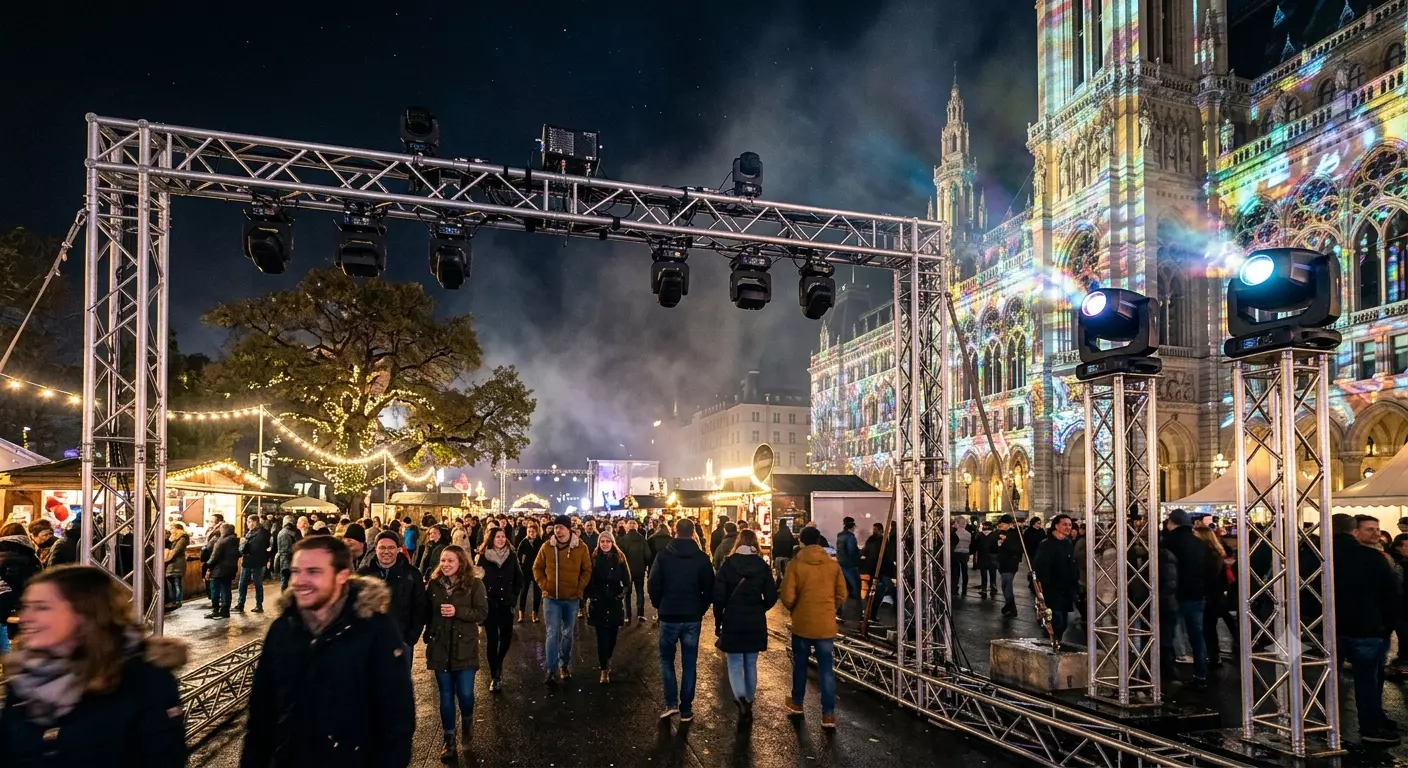
Truss totems are vertical towers commonly used to support projectors, speakers, lighting fixtures or signage. They are one of the most popular structures for projection mapping because they:
- Keep projectors above audience eye level
- Reduce obstruction from crowds
- Provide flexible positioning in plazas or event spaces
- Can be weighted with ballast for stability
Totems are especially useful when projecting across a room or public square where projector placement options are limited.
2. Goal-Post Truss Structures
Goal-post structures consist of two vertical towers connected by a horizontal truss beam across the top. These systems are extremely common because they:
- Create stable overhead mounting points
- Span over pathways or event areas
- Allow centered projector positioning
- Support multiple projectors or lighting fixtures
Goal-post truss is frequently used for immersive projection rooms, stage environments and municipal event entrances.
3. Ground-Supported Truss Grids
Large festivals and immersive environments may use full truss grids or box structures. These systems can support:
- Multiple projectors
- LED walls
- Lighting systems
- Scenic elements
Ground-supported truss is common when ceiling rigging is unavailable or when temporary infrastructure must be fully self-supporting.
4. Truss Arches and Scenic Structures
Truss can also become part of the visual design itself. Event organizers sometimes use:
- Entrance arches
- Projection tunnels
- Scenic framing structures
- Temporary immersive corridors
These structures can support projection, lighting and signage simultaneously while guiding visitor movement through the space.
Renting vs Purchasing Truss
When Renting Makes Sense
For most municipalities, festivals and one-off events, renting truss is usually the most practical option.
Renting is ideal when:
- You only need the structure for a short event window
- You want professional installation included
- You need engineered drawings or certified hardware
- You lack storage or transportation capability
- The layout changes frequently between events
Rental providers typically supply:
- Truss sections
- Base plates and ballast
- Rigging hardware
- Engineering documentation
- Installation crew
For projection mapping events, renting also allows organizers to scale the structure to the exact needs of the site without maintaining large inventories year-round.
When Purchasing Makes Sense
Purchasing truss can make sense for organizations that repeatedly produce events or maintain permanent installations.
Buying becomes more practical when:
- You host recurring annual events
- You frequently deploy projector systems
- You have storage space available
- You want faster setup flexibility without rental scheduling
- You use the same layouts repeatedly
Many event companies purchase smaller quantities of truss for:
- Projector totems
- Portable goal-post structures
- Trade show systems
- Indoor immersive installations
Larger grids and highly engineered outdoor structures are still commonly rented due to transportation and engineering complexity.
Engineering and Safety Considerations
Truss structures are professional rigging systems and must be treated seriously from a safety perspective. Important considerations include:
- Wind loading for outdoor installations
- Ballast requirements to prevent tipping
- Proper weight distribution
- Certified rigging hardware
- Electrical cable management
- Public safety clearance
Municipal and public events may require:
- Engineering approval
- Stamped drawings
- Electrical inspection
- Permit coordination
If your project involves public spaces or outdoor mounting, our article on
projection mapping safety and municipal compliance
covers these topics in more detail.
Integrating Truss With Projection Mapping
Projection mapping installations often rely on truss because buildings do not always provide ideal mounting positions. Truss allows projectors to be:
- Placed at the correct height and angle
- Centered relative to the projection surface
- Kept safely away from pedestrian traffic
- Protected inside weatherproof enclosures
For outdoor installations, projectors are frequently mounted inside:
- Weatherproof housings
- Climate-controlled enclosures
- Lockable protective cabinets
You can learn more about outdoor projector protection here:
projection enclosures.
Indoor vs Outdoor Truss Installations
Indoor Events
Indoor truss systems are generally simpler because they avoid wind and weather loads. Common indoor applications include:
- Immersive projection rooms
- Trade shows
- Corporate launches
- Stage environments
Indoor venues may also allow ceiling rigging, reducing the amount of ground-supported structure needed.
Outdoor Events
Outdoor installations require significantly more planning due to:
- Wind exposure
- Uneven ground
- Public access concerns
- Weather protection requirements
Outdoor truss often requires larger ballast systems and more conservative engineering assumptions.
Planning a Truss-Based Event Setup
When planning a projection mapping or outdoor event structure, gather:
- Photos of the event site
- Surface dimensions
- Desired audience viewing area
- Nearby power access
- Potential mounting locations
This allows projection and rigging teams to determine:
- Projector throw distances
- Required truss heights
- Safe equipment placement
- Ballast and engineering needs
Next Steps
If you’re planning an event and need help determining what type of truss structure makes sense for your projection setup, you can send site photos and rough layout details through our
contact page.
Whether you need a simple pair of projector totems or a large engineered goal-post structure, proper truss planning helps ensure your event is safe, visually clean and technically reliable.