
Weather Challenges in Outdoor Projection Mapping – Rain, Snow, Wind and Cold
Weather Challenges in Outdoor Projection Mapping – Rain, Snow, Wind and Cold
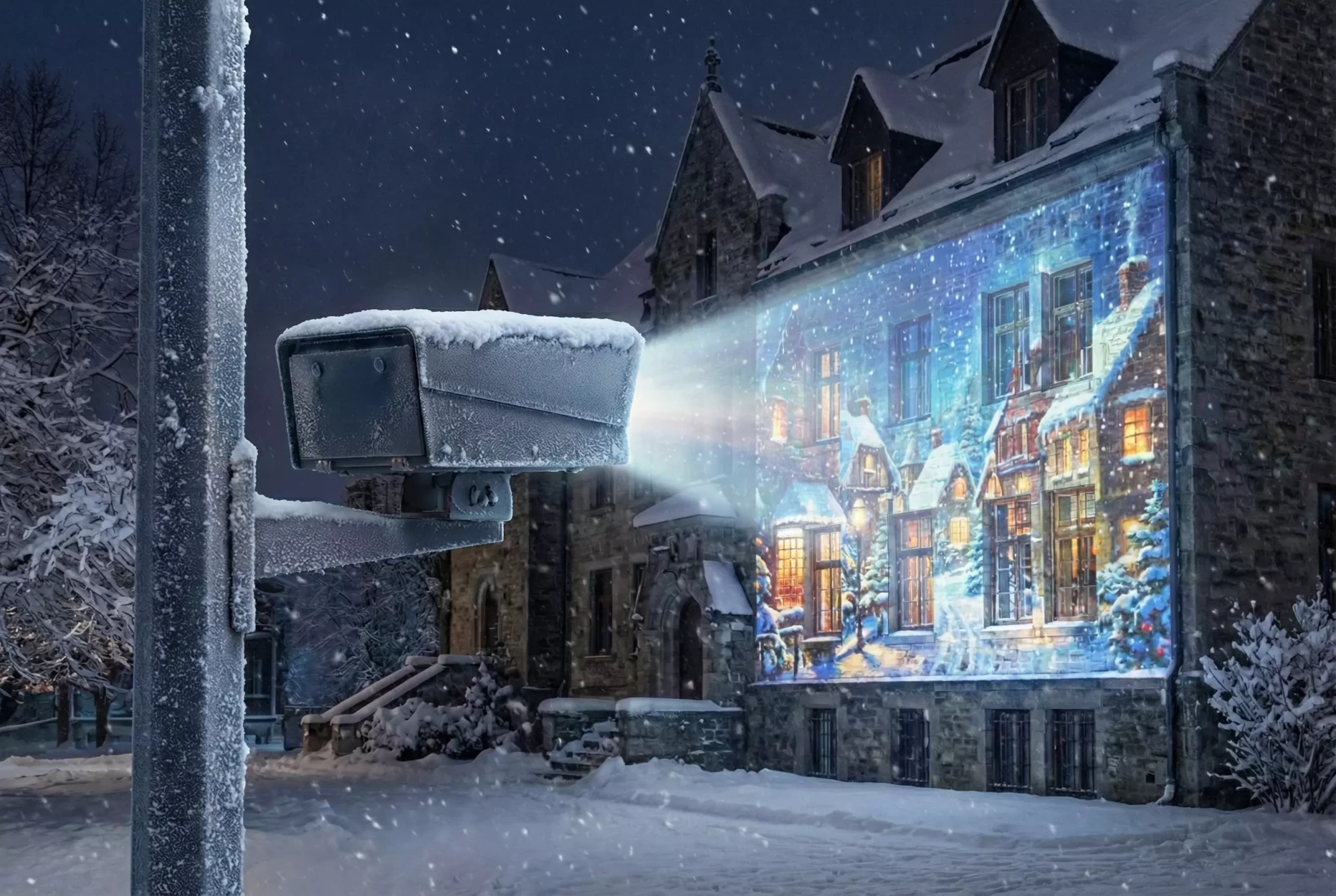
Outdoor projection mapping introduces environmental challenges that must be addressed for consistent, safe operation. Weather affects alignment, brightness, hardware longevity and safety. This guide explains how to manage rain, snow, wind and temperature so your outdoor shows run reliably.
1. Rain & Humidity
Rain can damage exposed projectors, wash out surfaces and introduce glare.
Solutions include:
- Sealed weatherproof projector enclosures
- Anti-fog filtration systems
- Proper downward angling to shed water
See our hardware protection options: projection enclosures.
2. Snow
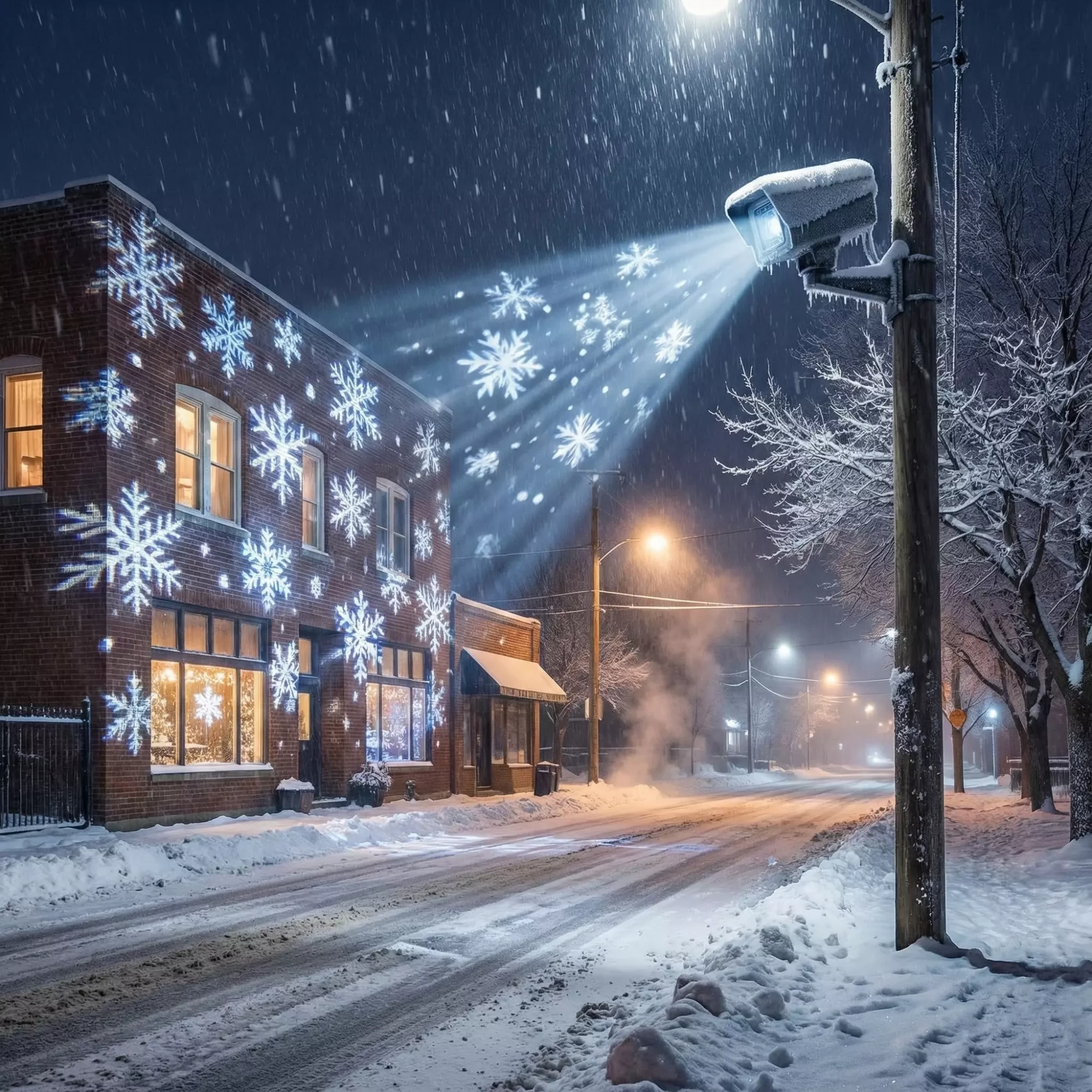
Snowfall reduces visibility and can accumulate on lenses or housings.
Solutions:
- Heated enclosures to prevent frost buildup
- Protective hoods over lens openings
- Regular brushing during heavy storms
3. Wind
Wind affects structural safety and image stability.
- Use engineered truss or pole mounts rated for wind loads
- Use tie-downs or ballast for temporary structures
- Avoid mounting projectors on flimsy risers
4. Temperature Extremes
Cold reduces brightness and stresses electronics; heat can trigger thermal shutdown.
Solutions include:
- Active heating systems for winter
- High-flow cooling for summer
- Thermostatically controlled housings
5. Surface Conditions
- Wet surfaces increase glare
- Snow buildup alters mapping surfaces
- Frost reduces contrast
Next Steps
For advice on weatherproofing your installation, send photos of your site to our contact page.
Proper environmental planning ensures reliable, safe and beautiful outdoor projection mapping year-round.