
How Projection Mapping Interacts With Stage Lighting, Lasers and Atmospheric FX
How Projection Mapping Interacts With Stage Lighting, Lasers and Atmospheric FX
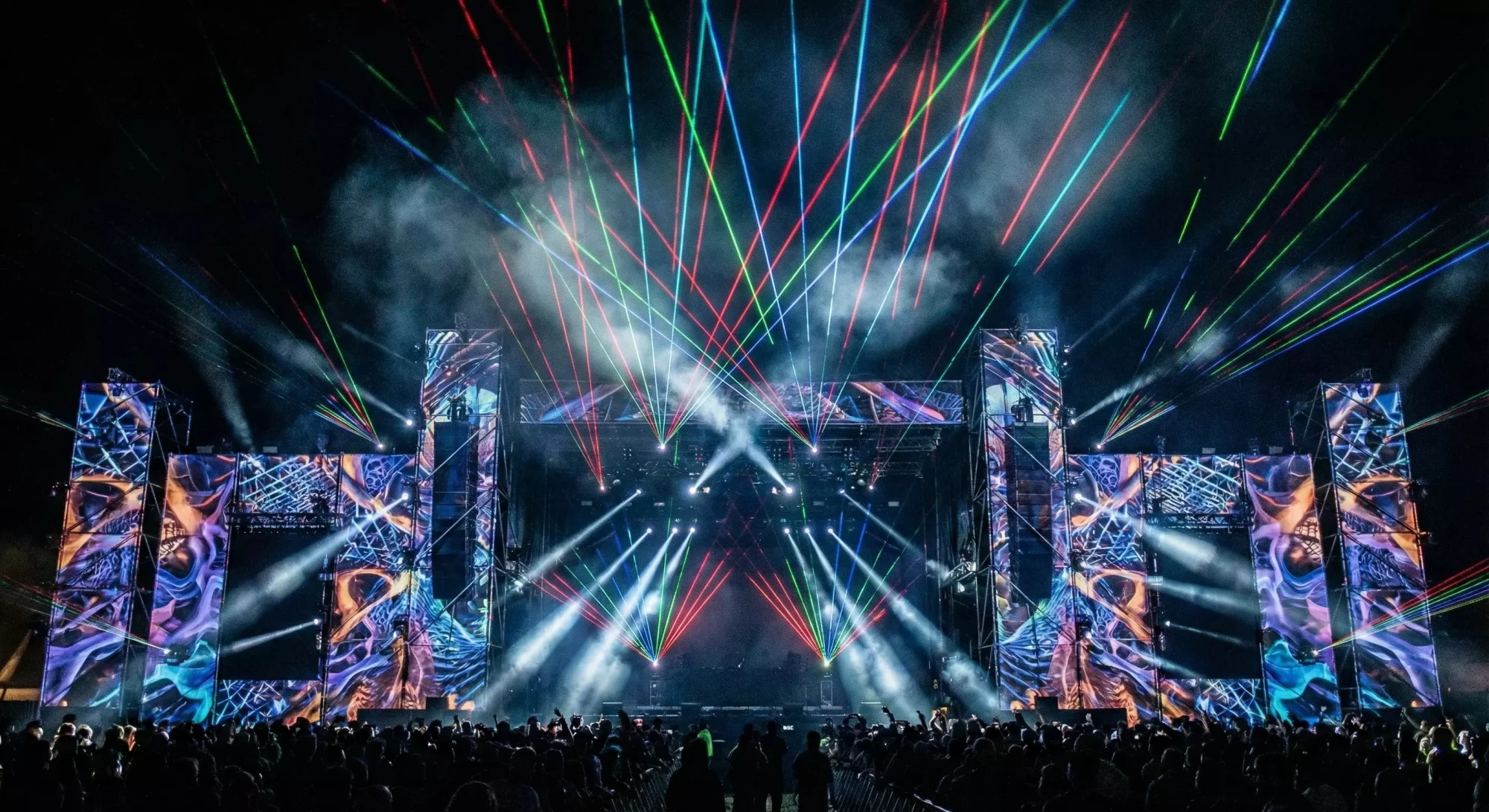
Projection mapping, stage lighting, lasers and atmospheric effects are powerful on their own—but when designed together, they create immersive visual environments that completely transform live experiences. Festivals, tours and municipal events can achieve some of their most dramatic looks when these systems are planned as a unified design rather than separate elements.
This guide explains how projection mapping interacts with lighting and atmospheric effects, and how technical directors can balance all systems for maximum impact.
The Role of Projection Mapping in a Stage Environment
Projection mapping brings detail, texture and motion to scenic elements without requiring physical builds. It excels at:
- Animating stage architecture
- Enhancing scenic towers or PA scrims
- Providing per-artist content looks
- Adding depth behind lighting effects
Projection forms the “canvas,” while lighting and lasers provide the “energy” on top.
How Lighting Designers Integrate Projection
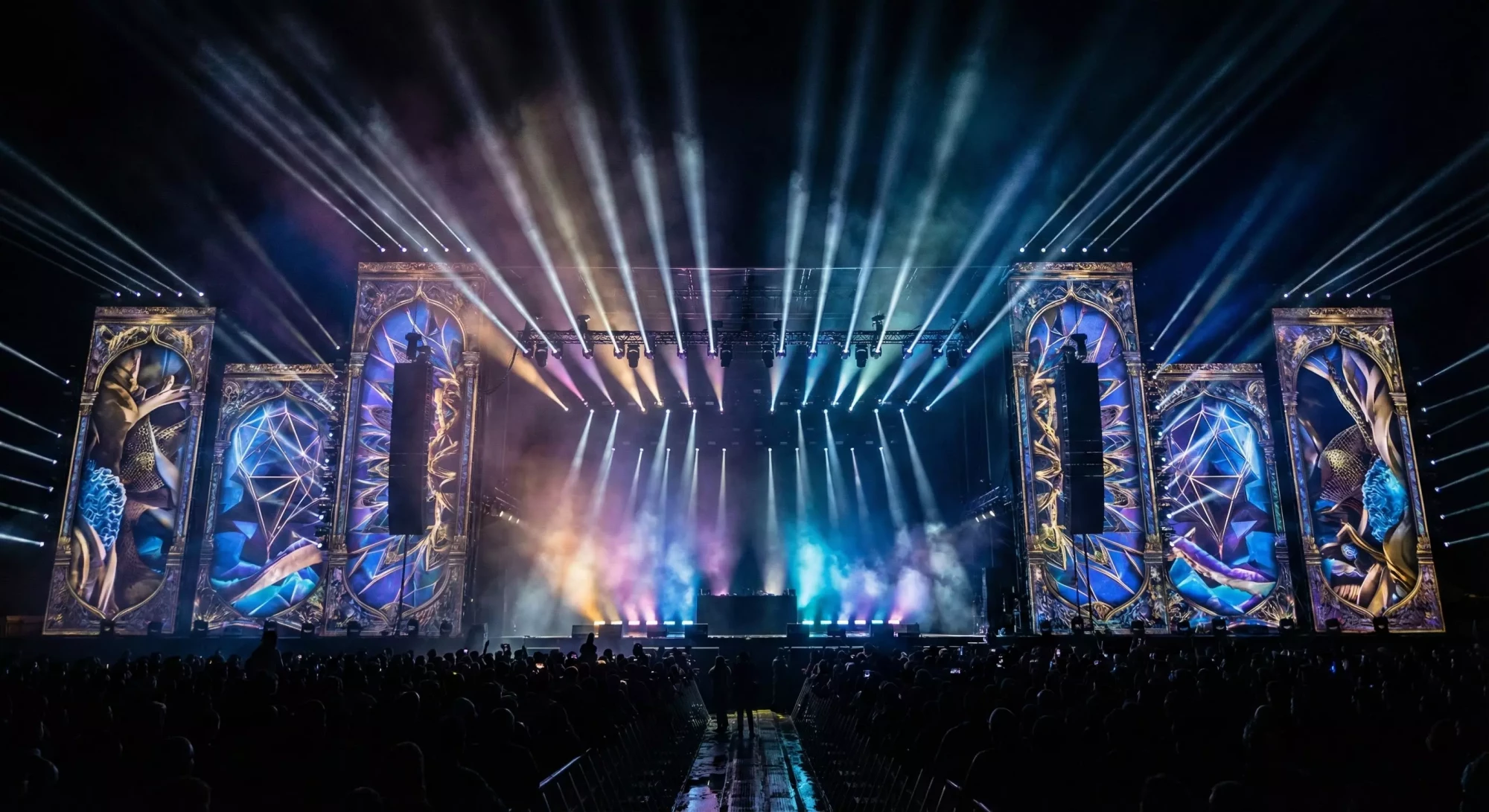
Lighting designers work closely with projection teams to ensure both systems support each other. Key strategies include:
- Avoiding direct wash light on projection surfaces
- Using narrow beams or mid-air looks instead of wide washes during mapped scenes
- Coordinating colour palettes to avoid visual conflict
- Timing lighting transitions to match projection cues
Projection is most impactful when lighting intentionally leaves space for it.
How Lasers and Projections Work Together
Lasers add geometry and sharpness to the environment, while projections add form and depth. Together, they create a multilayered look:
- Projection = surface layer
- Lasers = mid-air layer
The audience perceives these as one cohesive visual performance when cues are synchronized.
The Impact of Atmospheric FX
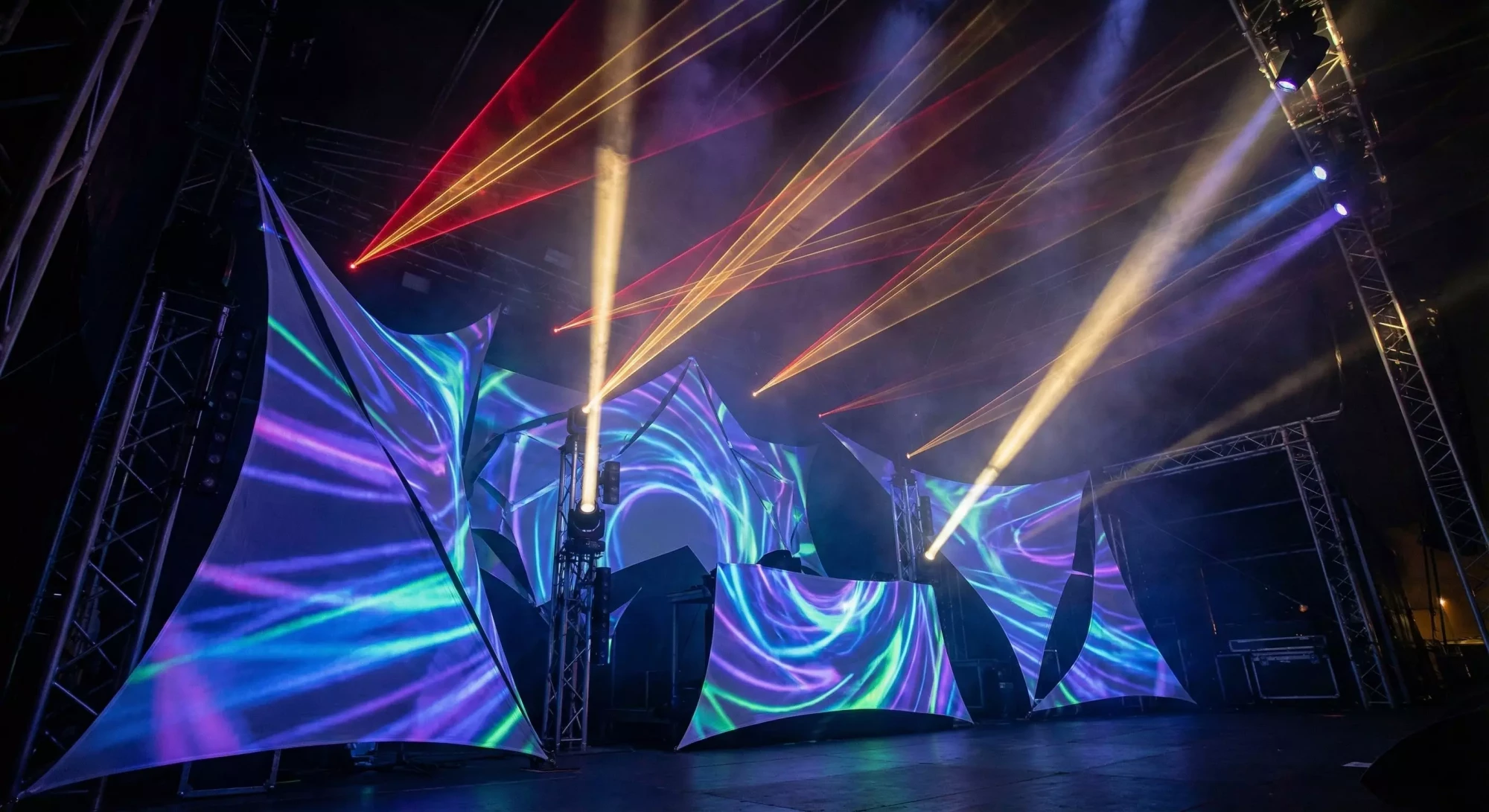
Atmospheric effects (haze, fog, CO₂ jets) dramatically enhance projection environments. Haze makes:
- Laser beams visible
- Light cones from moving heads sharper
- Projection beams partially visible (if haze is light)
However, too much haze can wash out fine projection details—especially on white scenic surfaces.
Designing a Unified Visual System
The strongest event designs treat lighting, projection, lasers and FX as one integrated system. This requires:
- Content sharing between lighting and projection departments
- Colour coordination during pre-visualization
- Synchronized cue stacks through show control
- Technical cooperation during site planning
Long before event day, the scenic team, lighting team and projection team should share diagrams of tower locations, projector sightlines, and expected beam paths.
Technical Planning Tips
- Place projectors so beam paths do not get obstructed by moving heads
- Use short-throw lenses for tight festival stages
- Allow lighting designers to view projection content in advance
- Ensure lasers are safely aimed above the projection path
When Projection Takes the Lead
Some scenes call for projection dominance—quiet moments, ambient intros, storytelling sequences. Lighting becomes minimal, lasers remain off, and the surface becomes the focus.
When Lighting Takes the Lead
In high-energy moments, lighting and lasers dominate and projection provides subtle supportive texture or colour.
Summary
When balanced correctly, projection mapping integrates beautifully with lighting, lasers and atmospheric effects. The result is a multi-layered experience that feels bigger and more immersive than any one system could achieve alone.
If you’d like help designing a projection system for a stage or festival, you can share your event layout through our contact page and we’ll help you build a cohesive multi-system visual plan.