
How to Choose the Right Angle and Distance for Your Projector
How to Choose the Right Angle and Distance for Your Projector
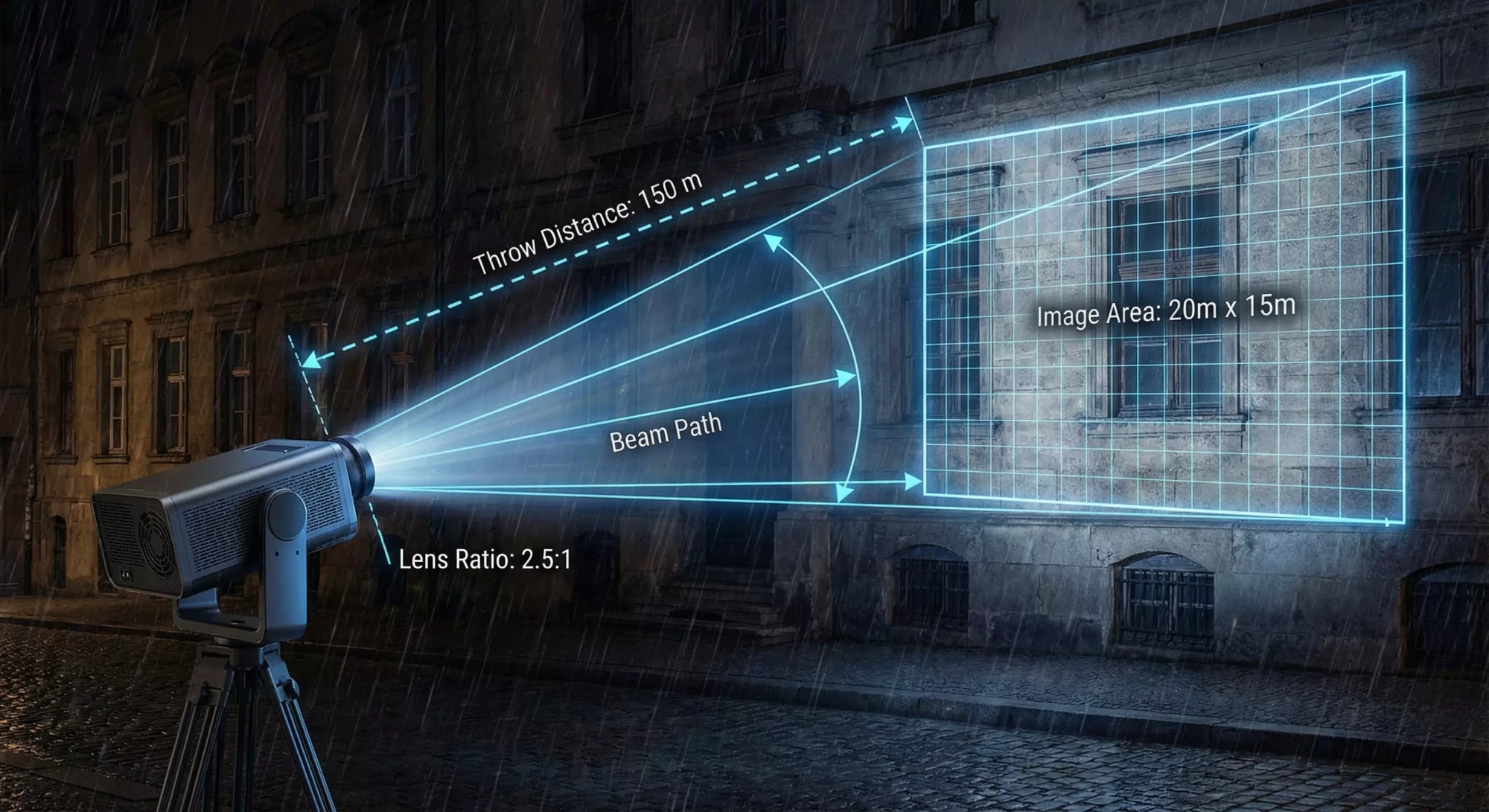
Choosing the right angle and distance for your projector is essential for clear, bright projection mapping. Incorrect angles cause distortion, hotspots and shadowing—while the wrong distance can result in undersized images or wasted brightness.
This guide covers the core principles you need to plan proper projector placement for buildings, inflatables, tents and ground projections.
The Three Main Variables
- Throw distance (how far the projector sits from the surface)
- Lens ratio (determines image size at a given distance)
- Projection angle (vertical + horizontal)
1. Choosing the Right Throw Distance
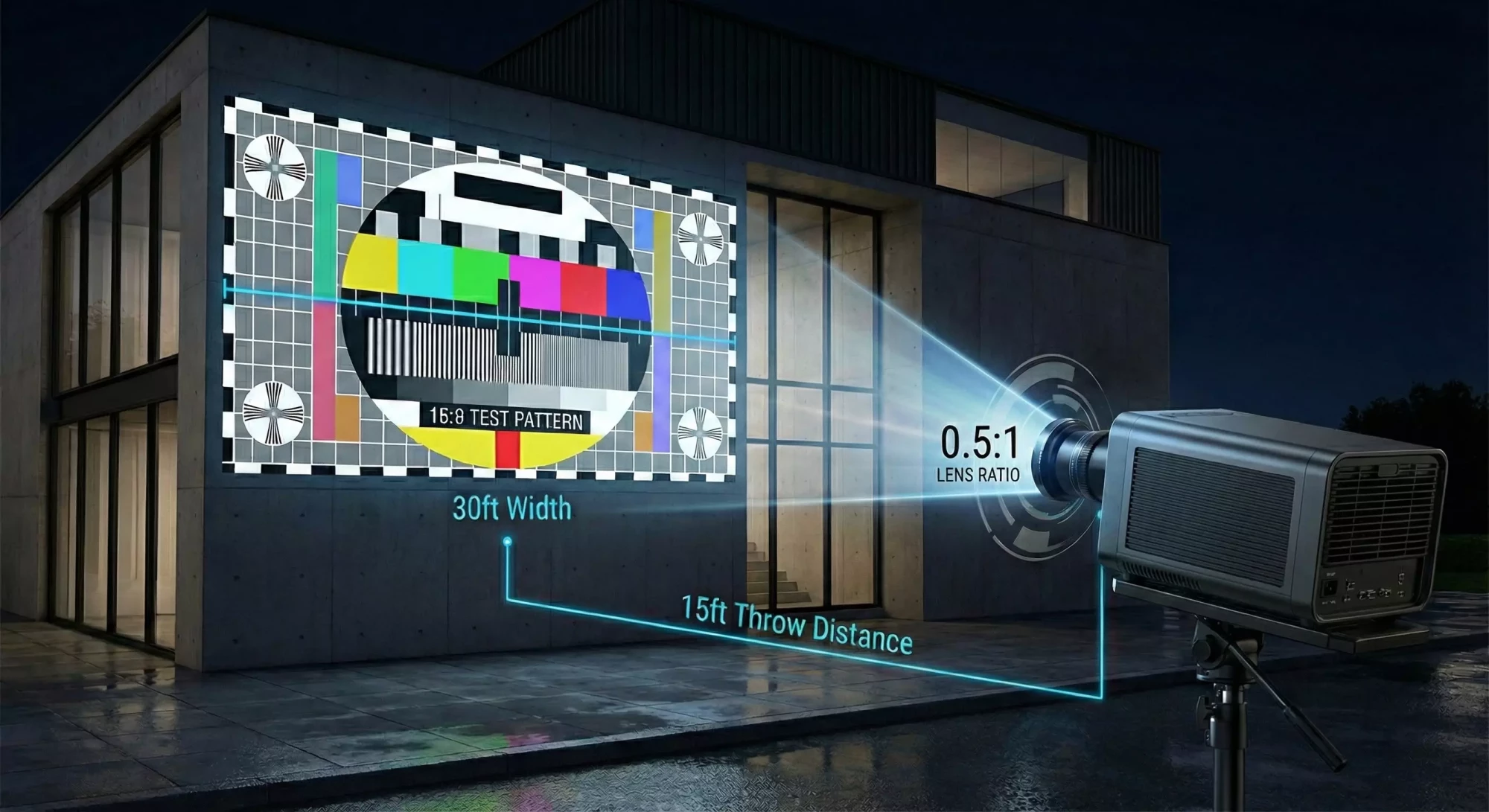
Throw distance determines the final size of your projection. Use the formula:
Image Width = Throw Distance ÷ Lens Ratio
Example:
A 0.5:1 lens at 15 ft produces a 30 ft wide image.
2. Understanding Lens Ratios
Common lens types:
- Ultra-short-throw: 0.3–0.5:1
- Short-throw: 0.5–0.8:1
- Standard: 1.0–1.5:1
- Long-throw: 2.0:1+
Short-throw lenses are ideal for tight downtown spaces or festival stages.
3. Choosing the Right Angle
Keep the projector as perpendicular to the surface as possible:
- Minimize keystone distortion
- Reduce stretching at top or bottom
- Maintain even brightness
4. Avoiding Obstructions
- Trees
- Light poles
- Rooftop edges
- Signs
Always survey the site during both day and night to confirm clear beam paths.
5. Brightness Considerations
The farther the projector is mounted, the more brightness drops. This is why:
- Shorter distance = better brightness
- Angle alignment matters
Next Steps
If you want help choosing the correct throw distance or lens for your project, send your surface photos through our contact page.
With proper planning, your projector placement will make your entire installation look dramatically better.