
How Cities Use Projection Mapping to Transform Downtown Areas and Public Spaces
How Cities Use Projection Mapping to Transform Downtown Areas and Public Spaces
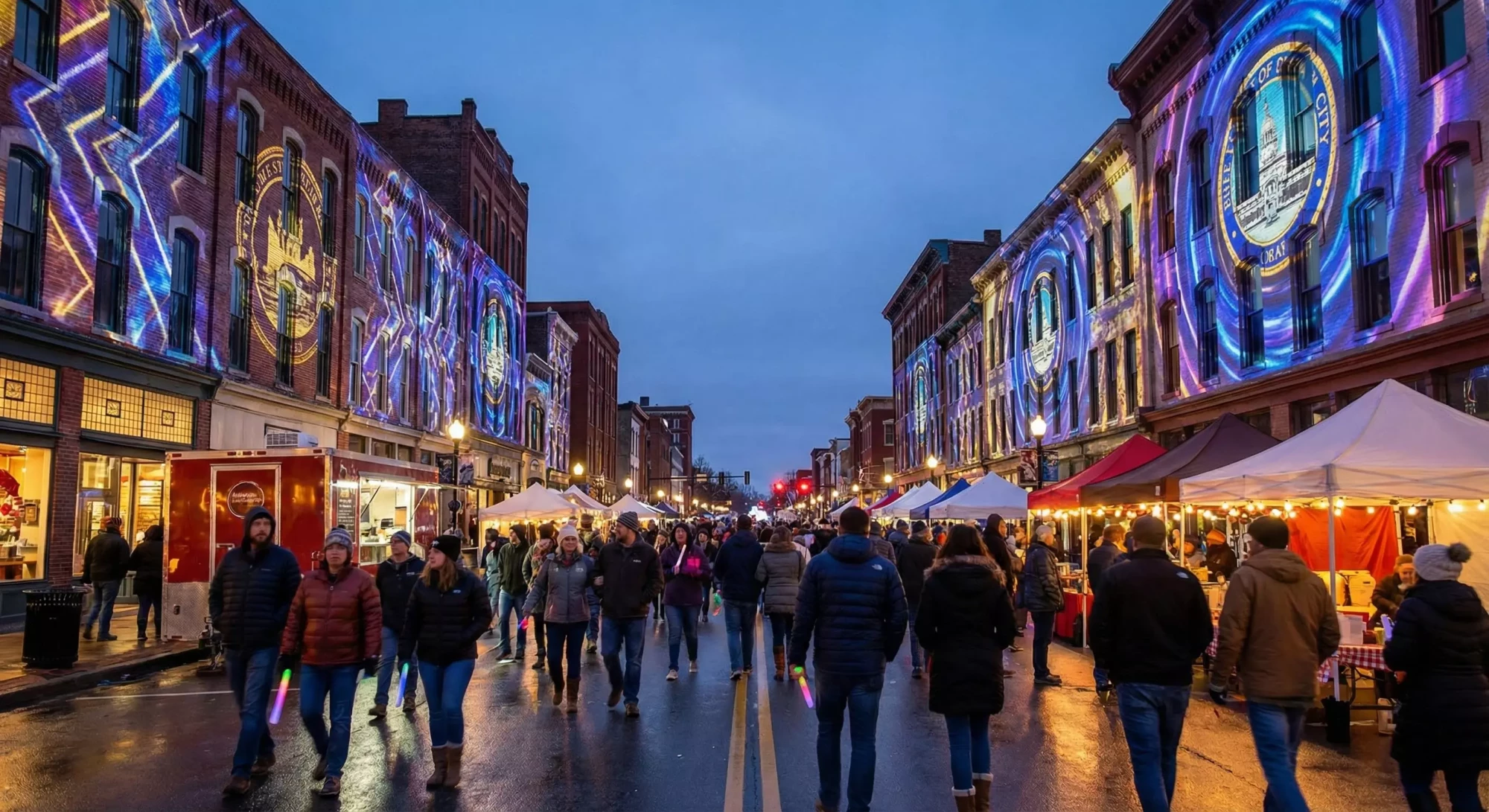
Cities across North America are turning to projection mapping as a strategic tool to bring residents downtown, attract tourism, and modernize their public spaces. Instead of relying solely on seasonal lights, banners, or traditional event structures, municipalities are now using projection mapping to create dynamic nighttime experiences that energize main streets and cultural districts.
Whether it’s a winter lights festival, a summer cultural celebration, or a weekend downtown activation, projection mapping helps cities create memorable public events at a fraction of the cost of permanent infrastructure. This guide explains how projection mapping works for urban spaces and how municipalities can use it to increase foot traffic and foster community engagement.
Why Cities Are Increasingly Turning to Projection Mapping
Municipal governments are under pressure to create experiences that compete with indoor entertainment and draw visitors to downtown areas. Projection mapping solves key challenges:
- It activates empty or underused spaces without construction.
- It encourages evening foot traffic, especially in winter.
- It creates a safe, family-friendly attraction with broad appeal.
- It allows seasonal programming without redesigning permanent features.
- It helps smaller cities compete with large urban centers for tourism.
Cities that previously relied on static lighting now use projection mapping to turn walls, pathways, and landmarks into immersive canvases with animated content. For municipalities wanting to enhance public experiences, our
municipal projection mapping services
outline popular applications for city spaces.
Where Cities Use Projection Mapping in Public Spaces
Projection mapping is highly adaptable, allowing municipalities to animate unique and unexpected surfaces. Here are the most common areas cities target:
City Hall and Civic Buildings
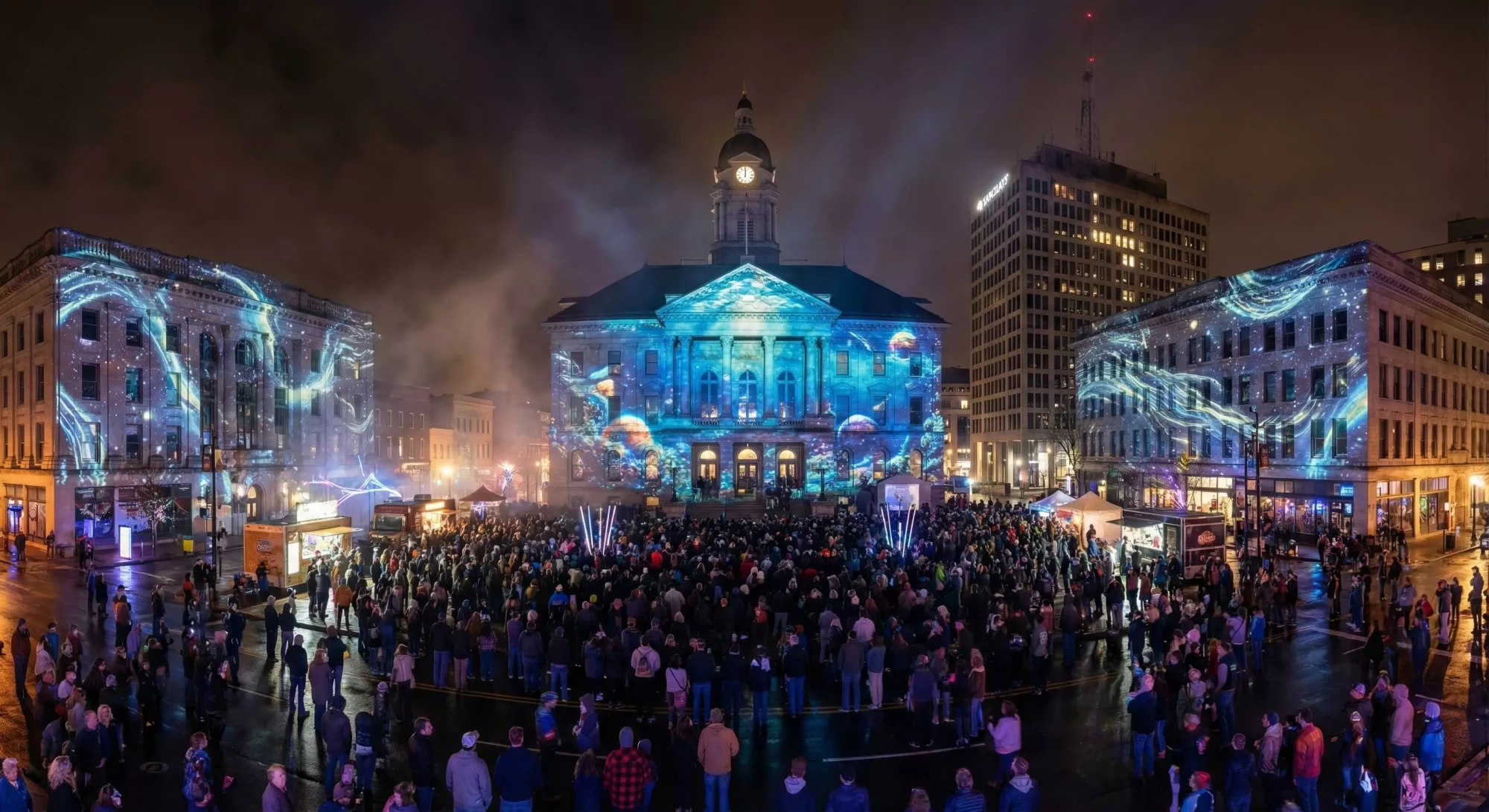
These iconic structures often become the centerpiece of a city’s seasonal or cultural programming. Their architectural depth makes projections visually rich, enhancing public gatherings such as New Year’s Eve, Canada Day, Christmas markets, and local heritage celebrations.
Libraries, Museums and Cultural Centers
Cultural institutions often participate in multi-building shows or host standalone projection evenings for art walks, Nuit Blanche-style festivals, or public art exhibits. Projection mapping turns these buildings into living works of art, increasing visibility and foot traffic.
Main Street Storefronts
Projection mapping can create visually unified corridors by illuminating multiple storefronts simultaneously. Cities often use soft animated patterns or thematic scenes to build atmosphere during night markets, sidewalk festivals, or seasonal shopping programs.
Parks, Trails and Public Squares
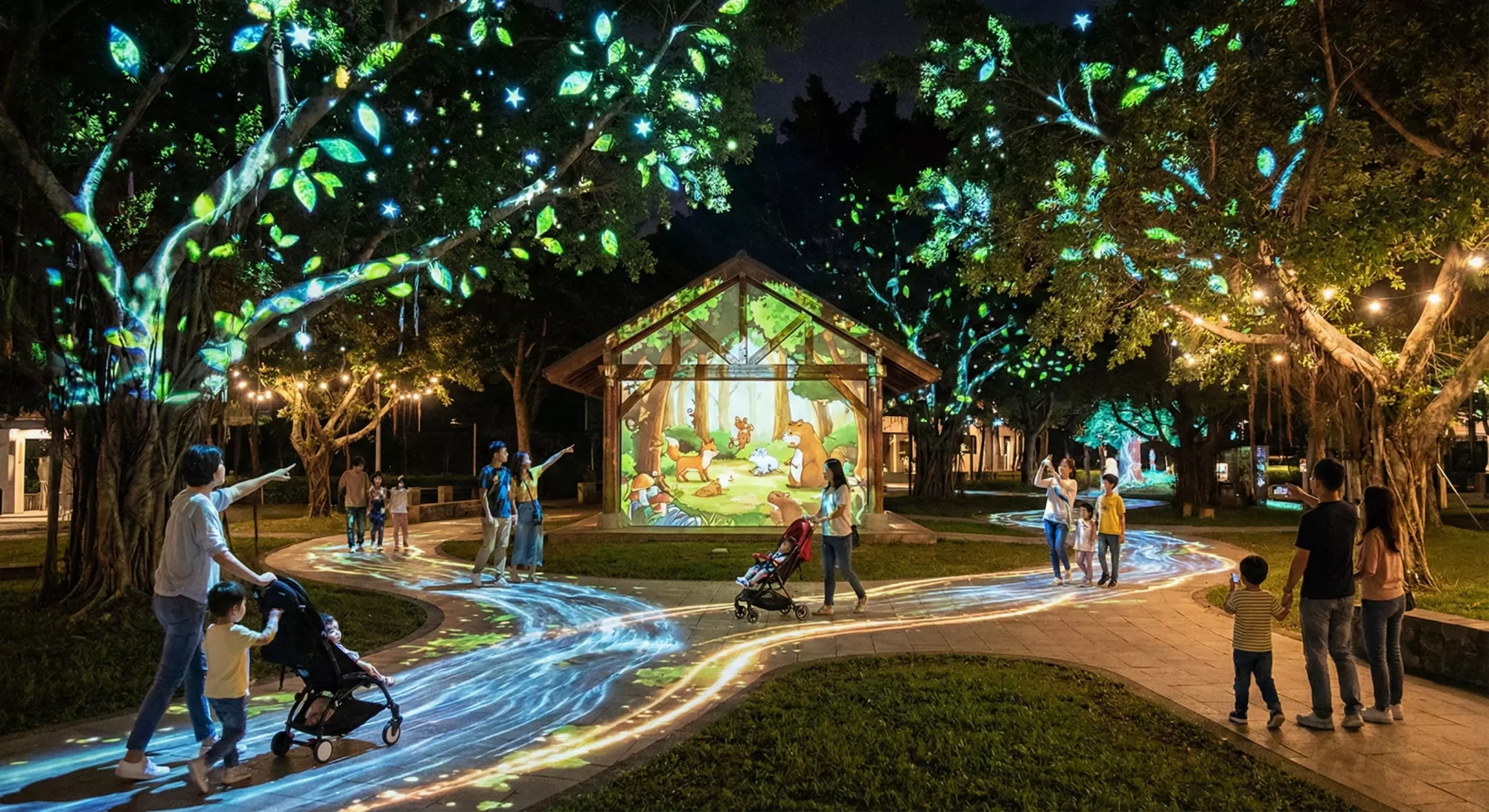
Open spaces offer opportunities for immersive installations, such as animated trees, projection-mapped sculptures, or guided nighttime walking routes. When paired with lighting installations, projection mapping helps transform a simple park into a multi-sensory attraction.
How Projection Mapping Helps Downtown Economic Development
Cities invest in projection mapping not just for entertainment, but because it supports economic and tourism goals:
- Increases foot traffic to shops, restaurants and cafés.
- Creates new evening activities that extend dwell time downtown.
- Generates social media visibility through shareable photo moments.
- Supports local artists by integrating digital art programming.
- Improves safety and walkability by bringing people into public areas.
Cities that run projection mapping events for several weeks see consistent nightly visitation, helping stabilize winter downtown activity when foot traffic is usually low.
Seasonal Programming for Public Spaces
Projection mapping allows cities to run seasonal campaigns quickly and efficiently:
- Christmas and holiday shows using snowflakes, festive animations and colour washes.
- Halloween displays with pumpkins, fall motifs and family-friendly themes.
- Summer cultural events celebrating local stories or Indigenous art.
- Tourism activations promoting local attractions or annual festivals.
If your municipality is exploring holiday programming, our
seasonal projection mapping services
cover Christmas, Halloween and winter events in detail.
Infrastructure Requirements for Municipal Installations
Cities often assume projection mapping requires more infrastructure than it actually does. In reality, municipal setups typically use:
- Weatherproof projector enclosures with heat and ventilation.
- Secure mounting systems (truss, poles or rooftops).
- Short-throw projectors to cover large surfaces from limited distance.
- Automated show scheduling for nightly playback.
Projector protection is especially important during winter or wet conditions. Learn more about proper hardware protection on our
projection enclosure page.
How Cities Can Get Started
If your city is considering projection mapping for downtown revitalization or seasonal events, the process typically begins with:
- Discussing goals (tourism, atmosphere, event integration)
- Reviewing possible projection surfaces
- Providing photos and measurements of downtown locations
- Estimating viewing distance and visitor flow
You can start by sharing photos of your chosen building or downtown area through our
contact form.
With the right planning and creative direction, projection mapping can become a signature element of your city’s public programming, transforming public spaces into vibrant nighttime attractions that residents look forward to each year.